
What is a nurse practitioner and what do they do?
October 22, 2026
Categories: Primary Care, Health & Wellness
Tags: Nurse Practitioner, wellness
When you schedule a primary care appointment, you may be offered the opportunity to see a nurse practitioner instead of a physician. But what exactly is a nurse practitioner, and how is their role different from a doctor’s? Nurse practitioners can provide many of the same high-quality primary care services as physicians while bringing a nursing background and perspective to patient care.
How a nurse practitioner cares for patients
A nurse practitioner is a registered nurse with advanced clinical training and a master’s or even doctoral degree. In primary care, a nurse practitioner can perform many of the same everyday clinical functions as a physician, including:
- Evaluate and assess patients
- Provide preventive and routine care
- Manage ongoing health conditions
- Prescribe medications
- Order diagnostic tests
- Interpret test results
- Refer patients to specialists or other services
“I always tell patients that I can do almost everything a physician can do. I can evaluate and assess you, order tests and medications, interpret test results, and refer you to specialists or other services when needed,” says Maria Nardulli, APRN, nurse practitioner at Loyola Medicine.
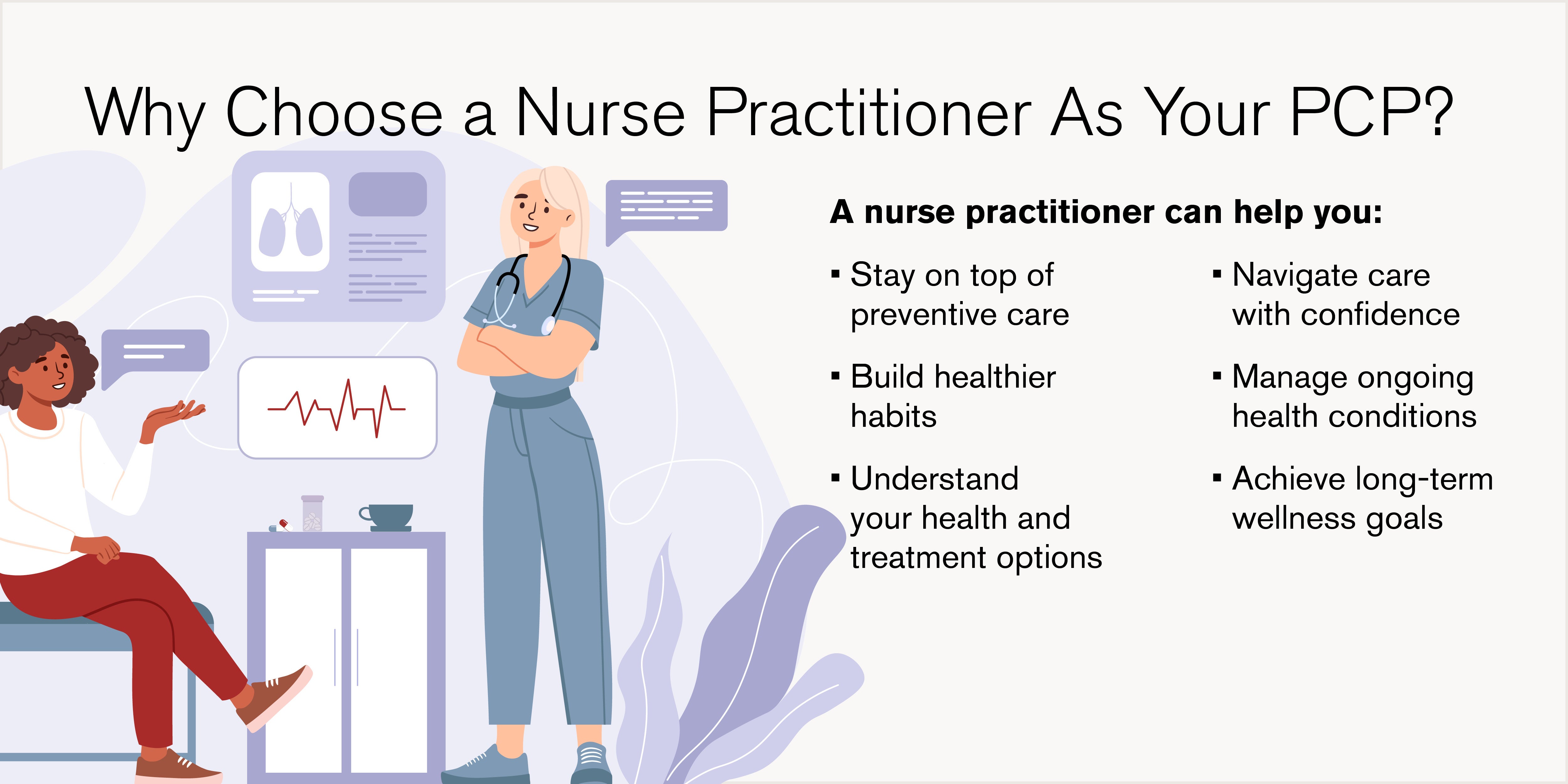
Differences between a doctor and nurse practitioner
When a patient is looking for a primary care doctor, they may be surprised by how similar an appointment is with a nurse practitioner versus a physician. Many nurse practitioners have their own patients, serving as their primary care provider by performing the same care and treatment, such as preventive care, routine appointments, long-term health management and chronic disease management.
“A lot of times patients will tell me, ‘You didn’t do anything different or less than what my doctor would have done.’ And I tell them, ‘No, I can do almost everything the same,” says Nardulli.
Scope of practice
While nurse practitioners can perform many of the same services as primary care physicians, not all nurse practitioners provide identical care. Their responsibilities vary based on their specialty, patient population and practice setting. For example, some focus on family medicine and preventive care, while others specialize in areas such as pediatrics, women's health, mental health or acute care. Nurse practitioners also collaborate with the attending physicians in the practice, asking questions if needed about their patients’ treatment.
Nurse practitioners improve access to primary care
Primary care physician appointment wait times are the highest they’ve ever been in the United States, with patients now waiting an average of 31 days for appointments. A nurse practitioner can help patients receive same-day or next-day care when their primary care physician is unavailable. Having a nurse practitioner in the practice allows patients to:
- Get an appointment for an immediate concern.
- Remain within their established primary care practice.
- See a provider who partners with their physician.
“I’ve had patients request me specifically because they knew their primary care physician probably would not have an appointment available and they had already developed that relationship with me,” says Nardulli.
How a nursing background can enhance patient experience
Nurses care for people during particularly vulnerable moments. Hospitalized patients may need help not only with medical needs but also basic daily activities and hygiene. That experience can develop interpersonal skills that nurse practitioners later bring into their provider relationships.
Many physicians have wonderful relationships with their patients, but nursing training can bring a different perspective to patient interactions. Through those care experiences, nurse practitioners have also built-up clinical experience and sharpened their diagnostic instincts.
“When you’re trained as a nurse, you approach care through a nursing model, which can bring a strong focus on interpersonal skills and the patient experience,” says Nardulli.
Why choose Loyola Medicine for primary care?
Your relationship with your primary care provider is one of the most important connections you can make. Your provider is not only there when you're ill, but they understand your health history and provide medical guidance that supports a healthier life. Our nurse practitioners take a multidisciplinary approach to patient care, collaborating with physicians to determine the best treatment plan and long-term care that is right for you.