
'You're never too old': Breast cancer survivor advocates for annual mammograms
October 19, 2026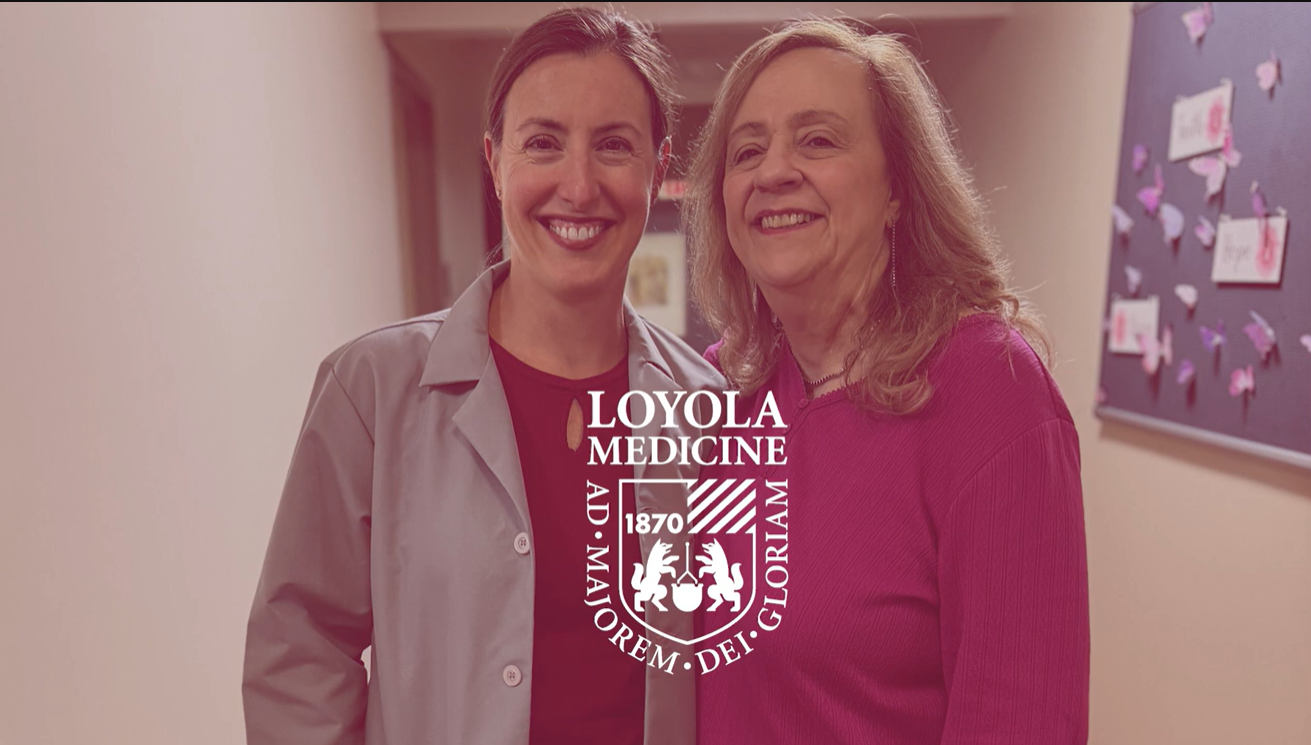
Categories: breast cancer, Women's Health
Tags: mammogram, breast cancer screening

Patricia Fitzgerald was in her 70s when she was diagnosed with breast cancer. She credits her annual mammograms for her early diagnosis and relatively pain-free treatment. One year later, Fitzgerald is cancer-free and back to living her life after what she describes as a minor disruption. She hopes her experience will encourage women of all ages to continue receiving annual mammograms.
Annual mammograms lead to early breast cancer detection
Fitzgerald never missed her annual mammograms and routinely received normal results. In 2025, after a routine screening mammogram, physicians requested additional imaging and testing, including a diagnostic mammogram, CT scan and biopsy.
The tests revealed ductal carcinoma in situ (DCIS), a noninvasive, stage 0 form of breast cancer that was detected before it had spread beyond the milk ducts. Because DCIS is typically found through routine screening and treated before becoming invasive, outcomes are often highly favorable.
“I wasn’t as frightened as I thought I might be because I knew it was caught early, since I had gone the previous year,” said Fitzgerald. “I was grateful that it was found and grateful I went for my tests. I felt like I was going to be okay and I am.”
Surgeon Robin Favor, MD, performed a lumpectomy to remove the tumor and a small margin of surrounding tissue. Fitzgerald described both the procedure and recovery as remarkably easy.
“I walked out of here like nothing ever happened,” said Fitzgerald. “It was pain-free as far as the incisions and everything. I felt fine.”
Why early detection can mean less intensive breast cancer treatment
Following surgery, Fitzgerald met with radiation oncologist Tamer Refaat, MD, who developed an individualized treatment plan based on the tumor’s size and biologic characteristics. Because her cancer was detected at an early stage through routine screening, Fitzgerald was able to avoid chemotherapy and undergo a less intensive treatment plan.
She did, however, undergo radiation therapy to ensure that no microscopic cancer cells remained and met with medical oncology to discuss endocrine therapy. Following radiation, Fitzgerald began taking oral medication to suppress estrogen receptors, helping reduce the risk of the cancer returning.
“Every patient is different, and we never dictate a treatment plan based only on a diagnosis,” said Dr. Refaat. “It is based on the individual patient and the stage of the tumor.”
Today, one year after completing treatment, Fitzgerald remains cancer-free and says her experience had minimal impact on her daily life.
“I live my life the same way I always have,” said Fitzgerald. “My life has not changed much because of this, and I'm grateful.”
Fitzgerald hopes her experience encourages women to continue receiving routine mammograms, regardless of age.
“I encourage all women of all ages to get a yearly mammogram,” said Fitzgerald. “It’s quick, it’s easy, and it’s painless. It is so much better if you do develop cancer to find it to discover it at an early stage, as I did, rather than to wait and feel a lump. When it’s advanced, the surgeries are more serious, the treatments are more serious and the chance of recurrence might be more serious. You’re never too old to develop breast cancer.”