
What to know about Lyme disease
July 23, 2026
The arrival of spring brings plenty of opportunities for outdoor activities, but it also signals the start of tick season. Unfortunately, while we’re enjoying more time outside, ticks can pose a risk by spreading disease. The most common tick-borne infection in the United States is Lyme disease. Thousands of cases occur every year, primarily due to tick bites. However, by empowering yourself with information about these insects, you can continue to have fun outside while staying safe.
What are the different types of ticks?
Ticks are small, parasitic arachnids found in a wide range of environments. While all ticks feed on blood, not all species transmit dangerous diseases, and understanding the differences can help you better assess your risk after a bite.
Some of the most important ticks to recognize in North America belong to the Ixodes species group. The blacklegged tick, also known as the deer tick, is commonly found in the northeastern, mid-Atlantic, and upper Midwestern United States. On the West Coast, the western blacklegged tick fills a similar role.
"Certain tick species are particularly significant because they are known carriers of Lyme disease, along with several other infections. Even in the United States, people becoming infected with these diseases is still a concern," says Mit Patel, MD, a family medicine physician at Loyola Medicine.
On the West Coast, the western blacklegged tick fills a similar role. These ticks are particularly significant because they are known carriers of Lyme disease, along with several other infections.
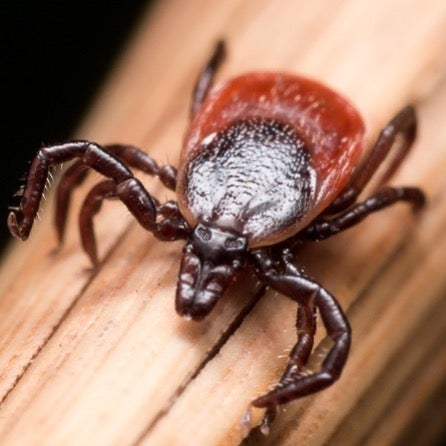
Deer ticks carry Lyme disease and other infections.
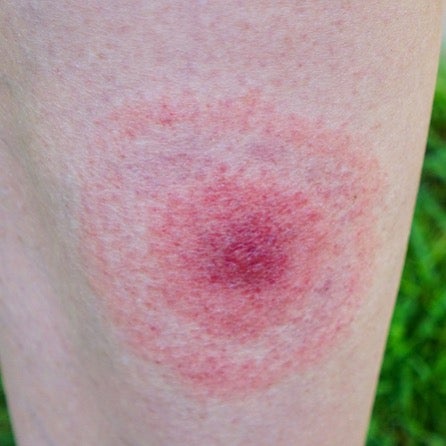
A bullseye (target) rash indicates Lyme disease.
Ticks and Lyme disease
The first description of Lyme disease appeared in the 1970s in Old Lyme, Connecticut. However, it would not be until the late 1970s that we developed effective antibiotic treatments after developing a deeper understanding of the infection and diagnosis.
Ticks can be frustrating to identify because of their smalls size. The juvenile stage of the tick is about the size of a poppy seed, while the full-adult stage ticks are only about 1/8 inch at their longest, and their bites do not hurt.
The ticks alone, however, are not sufficient to cause infection. The bacterium that causes Lyme disease must be present in the animal population, usually consisting of populations of mice and deer. Ticks in the area can acquire the infection and pass it on when they feed on a new host, including us.
Diagnosing Lyme disease
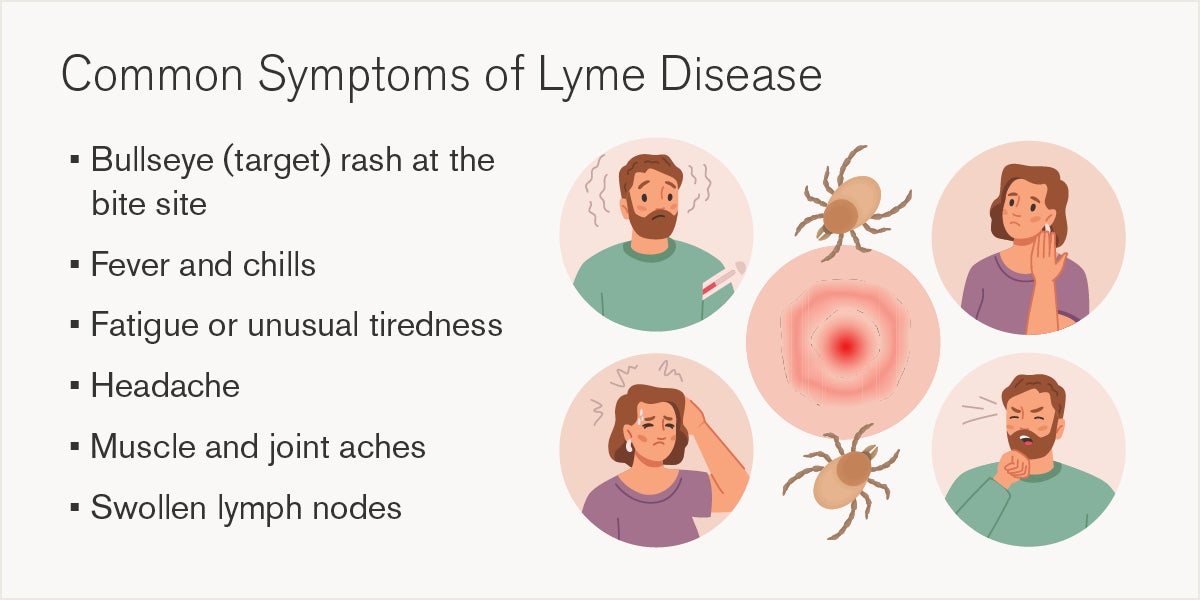
Diagnosis of Lyme disease occurs in stages. The characteristic bullseye rash appears as early as 2 to 31 days after the tick has transmitted the infection and may occur with or without symptoms of illness: fever, headache, stiff neck, muscle and/or joint pains and fatigue.
After this period of early infection (or without the rash appearing at all), early spread of the disease may occur, which may involve irritation of the heart, mild or moderate meningitis (inflammation of the tissues that cover the brain) or Bell’s palsy (paralysis of one side of the face).
Late spread of the disease, which generally occurs some weeks to months after the infection has started, usually appears as arthritis of a joint, most often a swollen and painful knee. Antibiotics will treat the infection at any point, but sooner is always better.
To acquire the infection, the right species of tick has to bite, and the tick must remain attached for at least 24 hours. Longer attachments of 36 to 48 hours increase the likelihood an infection will occur.
Preventing tick bites
While Lyme disease and tick bites can be dangerous, they’re fairly easy to prevent. Several effective insect repellents exist to reduce the likelihood of tick bites, such as DEET (any strength from 20 to 50%, preferably 25% for younger children and 35% for adults), picaridin 20%, or oil of lemon eucalyptus.
These usually are effective for six to eight hours, if swimming or excessive sweating does not wash them off. If your work or play takes you into brushy, bushy or grassy places, then lightweight but long-sleeved shirts and long pants, with the ankles tucked into socks, also help prevent tick attachment.
"When walking through taller grass or brush, everyone should wear long pants and check for ticks before heading back home. Their small size can make them difficult to see so be patient when scanning your legs," says Dr. Patel.
Tick checklist
After outdoor activities:
- Check clothing
- Check pets
- Shower within two hours
- Inspect scalp, behind ears, armpits, waistline and behind knees
Lyme disease treatments
If you find a tick attached to your skin, prompt removal is the most important first step. Use fine-tipped tweezers to grasp the tick as close to the skin’s surface as possible and pull upward with steady, even pressure. After removal, clean the bite area and your hands with soap and water, rubbing alcohol or an iodine scrub. In many cases, a tick bite does not lead to illness, but it’s important to monitor the area over the following days and weeks for signs such as a rash, fever, fatigue or joint pain.
When Lyme disease is diagnosed early, it is typically treated with a course of antibiotics, which are highly effective in most cases. Common treatments include doxycycline, amoxicillin or cefuroxime, usually taken for 10 to 21 days depending on the patient and severity of symptoms.
"Early treatment is key to preventing more serious complications, such as neurological issues or joint inflammation. In more advanced cases, longer or intravenous antibiotic therapy may be required, but most people recover fully when care is received promptly," says Dr. Patel.
If you have questions regarding tick bite prevention or believe you may have been bitten, book an appointment today to see a board-certified primary care physician or specialist by self-scheduling an in-person or virtual appointment using MyChart. Immediate care video visits are also available for quick diagnosis and treatment of tick bites.