
How organ matching and prioritization work in today’s transplant system
March 27, 2026
Navigating the transplant waiting list can feel overwhelming for patients and families, especially when so much of the process happens behind the scenes. From how patients are evaluated to how organs are matched and offered, the transplant system involves many moving parts working together to ensure fairness and safety.
Which organizations manage the organ transplant system?
Many patients believe individual hospitals or transplant centers decide who receives each available organ, but this is not the case. Instead, there are governing bodies that determine eligibility.
The main organization is the Organ Procurement and Transplantation Network (OPTN) which maintains the national registry for organ matching. You can think of it as the government aspect of the transplant system. It was created in 1984 to address the organ donation shortage and improve the organ matching and placement process in the United States.
Next is the United Network for Organ Sharing (UNOS) which manages the OPTN. This means that UNOS is responsible for many transplant functions, including:
- How organs are allocated
- Waiting list prioritization
- Understanding specific, rare situations where certain patients may receive priority
Transplant centers, like Loyola Medicine, only provide accurate data for these governing bodies, such as dialysis time or antibody sensitization in the case of kidney transplants. They do not personally determine priority.
“Transplant centers don’t decide who gets priority. Our role is to accurately enter each patient’s medical data so the national system can correctly rank them,” says Sanjeev Akkina, MD, a transplant nephrologist at Loyola Medicine.
How a patient gets on the organ transplantation list
If a doctor determines that a patient may need an organ transplant, the first step is to put them on the national waiting list. However, there are no specific rules that patients can follow to get them on a transplant waiting list faster. Instead, every transplant center determines their own qualifications for listing, and this criterion is dependent on which organ is needed. Most centers generally align with OPTN policy, although there may be slight variations between centers, e.g., some are more aggressive and take patients other centers may not.
If you're worried about getting onto a waiting list, the best thing to do is complete your required medical workup quickly and be proactive with testing and appointments. By accomplishing these requirements as soon as possible, you will have the greatest chance of being listed.
Key factors that determine transplant prioritization
Unfortunately, getting on a transplant waiting list is only the first step to receiving a new organ. The process of prioritization, determining which patient is in the greatest need for that organ, is very complicated, with many rules and factors determining fairness and objective standards.
“Every organ has its own method of determining priority. For kidneys, it’s largely based on how long a patient has been on dialysis, while other organs rely more heavily on how sick the patient is. The guiding principle is that those in the greatest need should receive an organ sooner,” says Dr. Akkina.
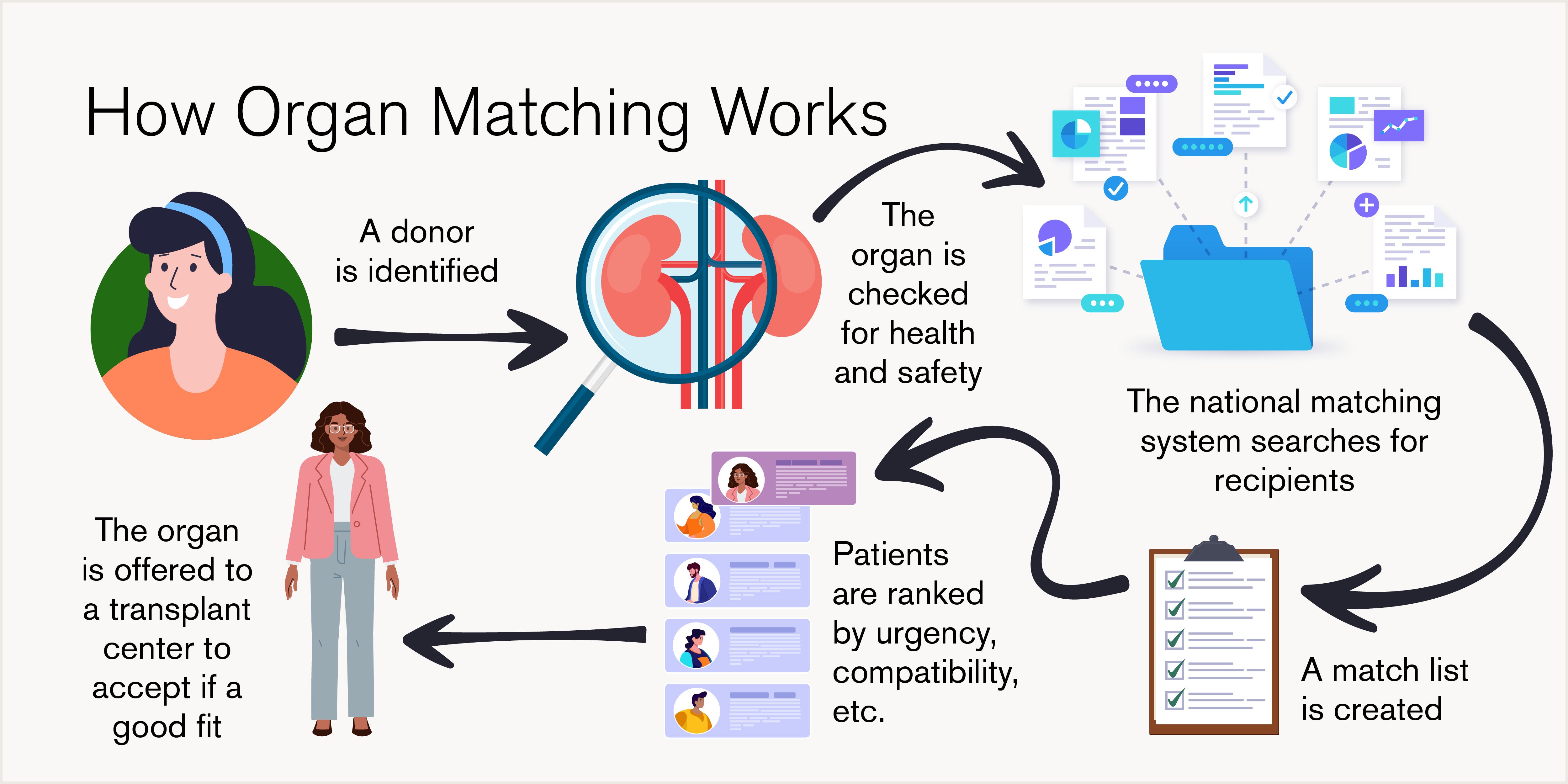
Despite the name, it’s best to think of the waiting list as more of a pool of patients, rather than a list of patients who simply need to wait their turn in a sequence. Every time an organ becomes available, UNOS ranks all patients by allocating a certain number of points which are based on rules set by OPTN. These points are influenced by various factors, including:
- Blood type
- Immune system characteristics
- Organ size
- Health status
- Geography
This prioritized list is known as a match run. The organ is then offered to the first patient on that list, which the transplant center can then accept or decline. If declined, the organ is offered to the second patient on the list. This process continues until a center accepts the organ.
While it may seem like an organ would be immediately accepted, this is not true. Centers may decline an organ for various reasons, such as organ quality, patient condition and availability, and logistics. The transplant team also only has one hour to decide before the organ is offered to a new patient.
“We sometimes decline an organ because longevity matters. A kidney from an older donor with medical issues might not be the best option for a younger recipient who needs something that will last decades,” says Dr. Akkina.
Finally, a match run is not permanent. A new prioritized list is created each time a new organ becomes available. This means a patient may be higher on one match run but lower on another or vice versa.
How long does it take to receive a new organ?
Due to the ongoing shortage of organ donors, more than 100,000 people in the United States are awaiting a transplant, and a new person is added to the list every eight minutes. This means that almost every patient will have to wait for an organ; how long is determined by many factors.
Every patient’s situation is unique. Some individuals are more seriously ill or their health may decline more quickly while others may have medical conditions that make it challenging to find a good match. It also depends on the needed organ, as some are rarer than others. For example, the national average wait time for a heart is four months, but the average wait time for a new pancreas is two years.
What can patients do to receive an organ faster?
Your place on a prioritization list is determined by factors outside of your control, like blood type, health status and immune system condition. However, there are steps you can take that may reduce your wait time.
Multiple listing
Patients can choose to be listed at hospitals in different parts of the country. When individuals are on the list at more than one transplant hospital, they can receive organ offers in more than one local area.
However, each hospital has its own rules regarding multiple listings which patients should inquire about. Also, being listed in more than one area does not guarantee an organ. Finally, transplant centers may require separate evaluations, even if the patient is already listed at another transplant hospital. This may not be worth the time or effort for certain patients.
Transferring waiting time
Patients can transfer their waiting time to a different hospital. The new hospital will add the waiting time from the original center to the time at the new hospital, although this requires the transplant teams at each hospital to agree to exchange information. They must also notify the OPTN of the transfer of waiting time.
Living donation
In addition to deceased organ donation, patients may also receive organs from living donors. The need for donor organs nationwide is far greater than the supply. Living donation offers a chance for more people to receive transplants, often sooner than they would from a deceased donor. For example, the average wait for a new kidney from someone deceased is five years, but the average wait from a living donor is only three to six months.
Accepting higher-risk organs
For some patients, being open to certain higher‑risk organ offers can meaningfully shorten the time they spend waiting for a transplant. These organs aren’t unsafe, but they may come from donors with medical histories or characteristics that make them less ideal for all recipients. Examples include organs from older donors, donors with certain medical conditions, or donors who test positive for treatable infections such as hepatitis C.
“For some patients, accepting certain higher‑risk organs can dramatically shorten the wait. In the clinical trials using hepatitis C‑positive organs with antiviral treatment, patients went from waiting eight years to waiting just a couple of months,” says Dr. Akkina. While the impact on wait-time is no longer as significant with widespread use of these organs around the U.S., the wait is shorter.
Ready to make a difference? Register to be an organ donor
Across the United States, the need for organ donors continues to far exceed the number of available organs. Sadly, the shortage has real consequences. For example, thirteen people die every day waiting for an organ transplant that never comes.
Becoming an organ donor can make an extraordinary impact on the lives of many people. A single organ donor can:
- Save up to eight lives through organ donation
- Heal or improve more than 75 others through tissue donation
Unfortunately, there is a major gap between Americans who support organ donation and those who sign up. Nearly 95% of Americans say they believe that organ donation is a good thing, yet only 58% are registered donors.
Registering as an organ donor is one of the most meaningful contributions an individual can make. It takes only a moment, but for patients facing end‑stage organ failure, it can mean the difference between years of uncertainty and a second chance at life.