Siblings lose more than 250 pounds in hopes of getting new hearts
August 4, 2026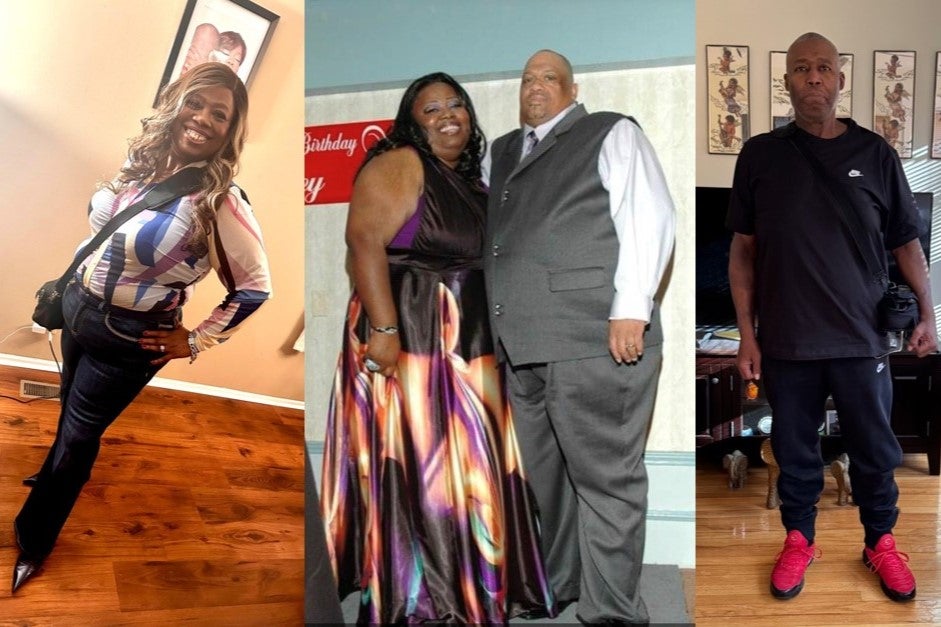
Categories: Transplant, Bariatrics
CONTACT:
Allison Peters
allison.peters@luhs.org
708-216-6140
After giving birth to her daughter in 1997, Tracey Young was diagnosed with post-partum cardiomyopathy and told she likely wouldn’t live to see her child’s 5th birthday. Devastated, she would later learn that she and her brother, Robert Millsaps, have cardiomyopathy, a hereditary heart disease. After years of complications, a heart transplant was identified as their best hope for long-term survival, but their weight was an obstacle to qualifying for a transplant. Undeterred, the pair has lost a combined total of more than 250 pounds to qualify for the heart transplant list.
The critical role of BMI in heart transplant success
Body Mass Index (BMI) plays a critical role in determining eligibility for organ transplants, particularly heart transplants. “We take surgery and the risks that come with it very seriously,” said Gregory Macaluso, MD, Loyola’s heart transplant medical director. “A higher BMI can increase the risks for morbidity and mortality. It can make surgery more complex and increase post-operative issues. It can also lead to additional health issues like diabetes which can impact the new organ.”
Young, now 55, has faced a long and difficult journey to qualify for a transplant. In 2007, she became unable to perform her job as a DCFS case worker. Everyday tasks became a struggle, and even walking caused shortness of breath. At her heaviest weight of 377 pounds, she was ineligible not only for the transplant list, but for a Left Ventricular Assist Device (LVAD) — a mechanical pump that can be implanted to help a weak heart circulate blood.
Loyola’s multidisciplinary team helped siblings overcome barriers to transplantation
To qualify for an LVAD, Alain Heroux, MD, advanced heart failure and transplant cardiologist, recommended she meet with Loyola’s bariatric team to explore weight loss options. “He told me to meet with them because I don’t look like my chart,” said Young. “My attitude and my willpower are so much more than my medical records. I told the doctor, ‘if you can do your part, I’ll do mine,’ and from the minute they put me on a bridge to transplant, I have worked my butt off to get that weight off.”
To accelerate her weight loss, Young underwent gastric sleeve surgery followed by gastric bypass surgery a year later. In 2012, Young became the first morbidly obese patient to receive an LVAD at Loyola. Committed to her health journey, she begins each day with cardio and weight training before 4 a.m. and maintains a healthy diet. After reducing her weight to 235 pounds, she became eligible for placement on the heart transplant list in July 2024.
“I was doing things I never thought I could do in the gym,” said Young. “It took me 4,440 days to get on the transplant list, but I never gave up and I never quit.”
Young is not navigating this journey alone. In late 2007, her brother Robert Millsaps went to Loyola after experiencing a “funny feeling” and difficulty breathing. While hospitalized, he fainted and regained consciousness as doctors were performing chest compressions.
In 2016, Millsaps also received an LVAD device and lost more than 100 pounds with the help of weight loss medications and gastric sleeve surgery. After lowering his weight to 229, Millsaps was placed on the transplant list in August 2024, just weeks after his sister.
Like his sister, Millsaps is committed to doing the work to remain on the transplant list. “I learned a lot from her,” said Millsaps. “This was something I should have been focusing on earlier. I’m glad I was able to lose the weight because I have kids and grandkids. I’ve had the LVAD for more than eight years, so that’s eight years added to my life already. I hope that when I get a heart that will add even more time.”
Loyola siblings thrive with LVAD support while awaiting heart transplant donors
Dr. Macaluso says their continued weight loss is extraordinary. “Many patients who receive LVADs begin to feel better and regain strength after being very ill, which can lead to weight gain as their appetites return, and they rebuild lost bone and muscle mass. Their weight loss and overall health journey is a testament to both siblings' personal motivation and the unwavering support of the Loyola transplant and VAD coordinators who continue to champion their progress.”
The siblings, both with O positive blood types, remain hopeful they will both find donors. “The great thing about the Loyola team is they really care about you,” said Millsaps. “They want to make sure we’re getting the best matches.”
Both siblings continue to stay active and eat well to maintain their eligibility on the transplant list. They’re also deeply grateful for the improved quality of life their LVADs have given them. Millsaps enjoys spending time with his children and grandchildren, while Young is proud to be celebrating nearly 33 years with her husband.
“We want to spread the word because the more people praying for us, the more strength and hope we feel,” said Young. “If we can change even one person’s life by sharing our story, that alone is a blessing.”