
Why melanoma treatment is no longer one-size-fits-all
March 3, 2026
Melanoma is a skin cancer that occurs when the cells which give the skin its tan or brown color (known as melanocytes) grow out of control. It’s a less common form of skin cancer but is considered more dangerous due to the likelihood of spreading to other parts of the body if not found in the early stages. While most early-stage cases of melanoma can be cured with surgery alone, combining both surgery and systemic therapy — known as immunotherapy and targeted therapy — often leads to improved outcomes.
Understanding melanoma and why personalized treatment matters
Melanoma behaves differently from many other skin cancers. While it begins in melanocytes located in the top layers of the skin, it has a higher likelihood of spreading (metastasizing) if it becomes thick enough or reaches the body’s lymphatic system, an important part of the body’s immune system. Melanoma accounts for only about 1% of all cancer deaths, but has the potential to become more dangerous if not discovered quickly.
This is where the partnership between surgery and systemic therapies, such as immunotherapy or targeted medications, becomes essential, especially for patients whose cancer is not early enough to be low‑risk, but not widespread enough to be considered a late-stage case.
“Treatment today is far more nuanced than it was even a decade ago. Historically, surgery was the primary tool for melanoma. But advancements in systemic therapy are allowing specialists to use a combination approach, sometimes even using medications before surgery to shrink cancer or reduce how extensive a procedure needs to be,” says Erin A. Strong, MD, surgical oncologist at Loyola Medicine.
What are the surgical options to treat melanoma?
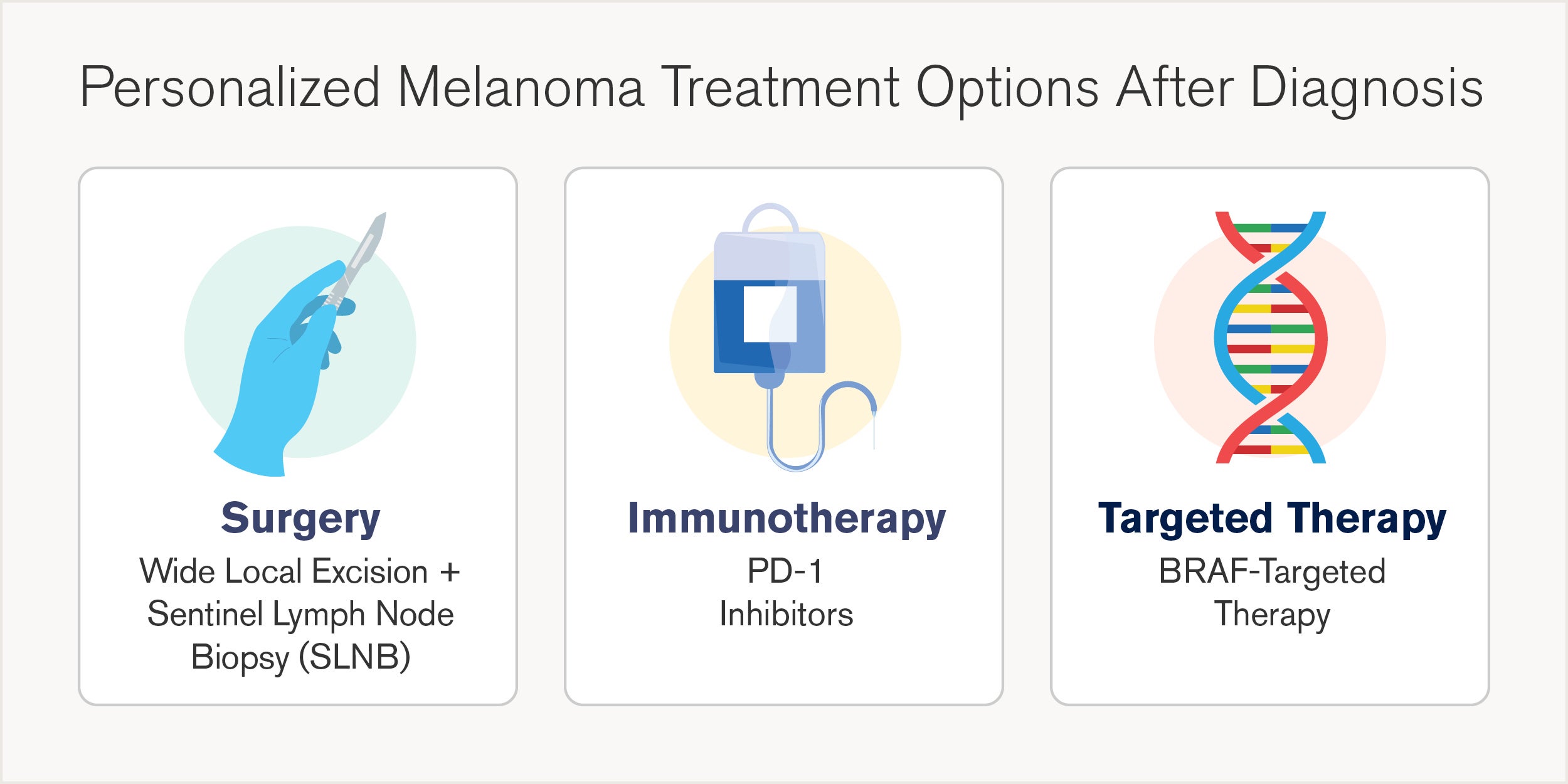
For most people diagnosed with early‑stage melanoma, surgery is usually the first and only treatment needed. This typically involves a wide local excision, where the surgeon removes the melanoma along with a margin of normal skin to ensure all cancer cells are removed. This is the standard approach for stage 0 and stage 1 melanoma.
“The depth of the melanoma, not just what it looks like on the skin, determines the next steps. If a melanoma is deep enough to possibly enter lymphatic channels, surgeons may recommend a sentinel lymph node biopsy (SLNB). This test determines whether the cancer has traveled to the first lymph node (or nodes) that drain the area where the melanoma started,” says Dr. Strong.
This procedure helps doctors understand staging and guide future treatment recommendations. If the sentinel node contains cancer cells, patients may move into treatment designed for stage III melanoma, where systemic therapy often plays a more important role.
Both wide local excision and SLNB are routine procedures in modern melanoma care. They allow doctors to determine how much disease is present, and whether the best strategy involves surgery alone or a combination of surgery and medication.
How systemic therapies are transforming melanoma treatment
Systemic therapies treat the entire body rather than a single tumor. They can be particularly powerful for melanoma because of the cancer’s tendency to spread or recur. There are two major categories widely used today:
Immunotherapy
Immunotherapy boosts a patient’s immune system so it can better recognize and destroy cancer cells. Specifically, PD‑1 inhibitors are standard treatments for unresectable (can’t be completely removed) or metastatic melanoma. They may be used after surgery for higher-risk, removable disease. These medications have transformed melanoma care. For many years, patients with advanced melanoma had very limited options. Immunotherapy has changed survival outcomes significantly and inspired specialists to consider using it earlier, sometimes even before surgery.
Targeted therapy
Some melanomas carry a mutation in the BRAF gene, which controls cell growth. For these patients, targeted therapy, usually inhibitors for these genes, can dramatically slow or shrink tumors. Some research has shown that targeted BRAF therapy can help in treating BRAF‑positive metastatic melanoma or when the disease progresses after immunotherapy.
Targeted therapy is not used for all patients, but it can be powerful for those with the right mutation. Like immunotherapy, it can be used before or after surgery depending on individual needs.
How surgery and systemic therapy work together
There is no one-size-fits-all treatment for patients. While one therapy might work for one patient, it may not be as effective for another. When melanoma is not limited to the top layers of skin, but not widely metastatic, combining surgery and systemic therapy can offer patients the strongest chance of long‑term control.
“Thankfully, specialists now have more effective medications. The shift in thinking is no longer ‘surgery first, then everything else’ but rather ‘what combination and sequence of treatments will give the best outcome?’” says Dr. Strong.
For example:
- A patient with a thicker melanoma that has signs of it spreading to the lymph nodes may begin with immunotherapy to reduce cancer in the nodes.
- After a period of treatment, a more limited surgery may remove only a few affected nodes rather than all nodes in an area.
- Post‑surgery, additional systemic therapy may be used to reduce the risk of recurrence.
These decisions are made collaboratively among surgeons, medical oncologists, dermatopathologists, plastic surgeons and sometimes radiation oncologists, each contributing essential expertise. This multidisciplinary approach ensures that each patient’s plan is uniquely tailored.
Treatment side effects and recovery
Any surgery or systemic therapy comes with potential side effects and understanding them helps patients make informed decisions. Surgical risks vary based on the size and location of the melanoma. For example:
- Removing tissue from certain areas can cause scarring and tightness.
- Sentinel lymph node biopsies can cause temporary swelling or discomfort.
- Extensive lymph node removal, which is becoming less common due to better medications, can cause long‑term swelling.
Immunotherapy and targeted therapy each have their own side effects, ranging from fatigue and rash to more serious immune‑related reactions. These are manageable for most patients, and many find that the benefits outweigh the risks, especially when aiming to reduce the chance of melanoma returning.
“I don’t foresee a future where surgery disappears entirely, although I anticipate that surgeries will continue becoming less extensive as systemic therapies improve. This means fewer long-term side effects, fewer large lymph node dissections and more personalized care,” says Dr. Strong.