Why Mohs surgery is the gold standard for treating certain types of skin cancer
April 27, 2026
Categories: Dermatology, Cancer Care
Tags: skin cancer, MOHS - micrographic dermatologic surgery, MOHS - micrographic surgery
Receiving a skin cancer diagnosis can feel overwhelming. Fortunately, modern dermatologic surgery offers highly effective treatment options. One of the most advanced and accurate techniques available today is Mohs micrographic surgery. This procedure is widely recognized for its high cure rates and its ability to preserve as much healthy skin as possible.
What is Mohs micrographic surgery?
Mohs micrographic surgery, known commonly as Mohs surgery, is a specialized surgical technique used to treat certain types of skin cancer, most commonly basal cell carcinoma and squamous cell carcinoma. It involves removing cancerous skin layer by layer, with each layer examined under a microscope during the procedure. The surgeon continues removing tissue until no cancer cells remain.
What makes Mohs surgery unique is that 100% of the surgical area is examined, compared to standard excision, which evaluates only a small sample of the tissue edges. This allows for precise cancer removal while sparing healthy skin.
“Mohs surgery is the way that we locate the cancer, cut just around the edge of it, and then process the tissue right there in our office in real time. About 20 minutes later, we can look at it under the microscope to see if any cancer cells are left,” says Curtis Lockhart, MD, dermatological surgeon at Loyola Medicine.
Which types of skin cancer are treated with Mohs surgery?
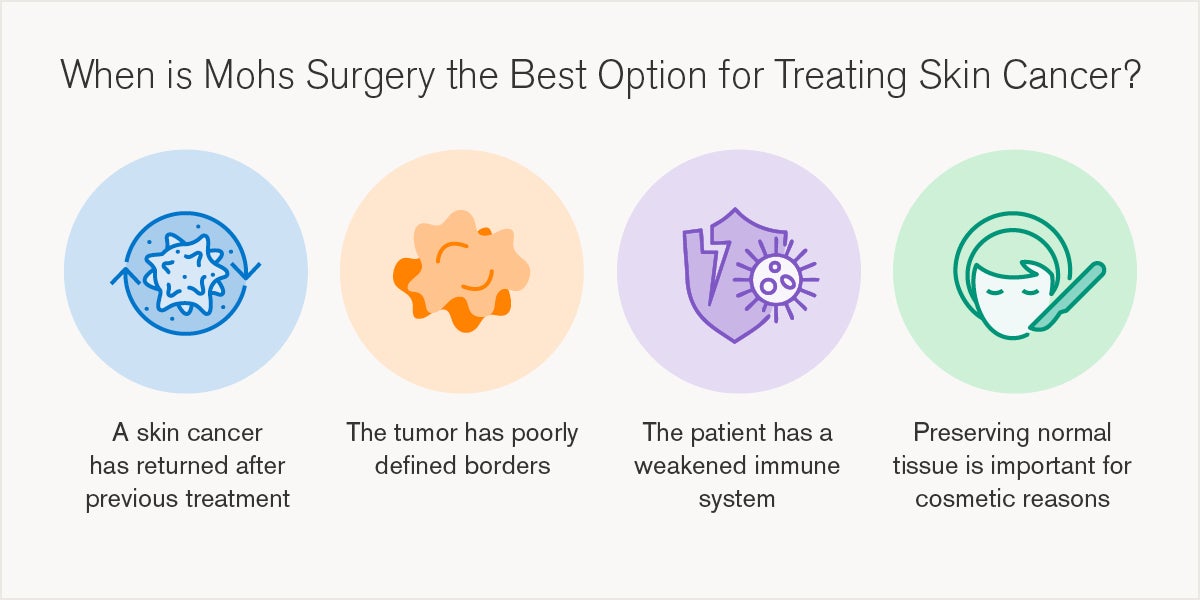
Mohs surgery is typically recommended for skin cancers, except melanoma, that have a higher risk of recurrence, are aggressive, or appear in cosmetically or functionally sensitive areas such as the face, hands or feet.
How Mohs surgery works
Mohs surgery is performed as an outpatient procedure, usually in a dermatologist’s office, under local anesthesia.
Step 1: Top layer of skin removal
The surgeon removes the visible portion of the skin cancer along with a thin layer of surrounding tissue. The area is then temporarily bandaged.
Step 2: Lab analysis
The removed tissue is processed on-site and examined under a microscope. The surgeon carefully checks for cancer cells at the edges and bottom of the sample. A detailed map is created to show exactly where any remaining cancer is located.
Step 3: Additional layers (if needed)
If cancer cells are found, the surgeon removes another thin layer, but only from the precise area where cancer remains. This process repeats until all margins are clear.
Step 4: Wound repair
Once the cancer is fully removed, the surgeon will determine how best to manage the wound. Some wounds heal naturally, while others require stitches, reconstructive techniques or skin grafts. In many cases, reconstruction is completed the same day.
Skin cancer cure rates and effectiveness
Mohs surgery offers the highest cure rates of any skin cancer treatment, with cure rates reaching up to 99% for new basal cell carcinomas and approximately 95% for recurrent cancers.
These outcomes are possible because Mohs surgery allows surgeons to detect and remove microscopic cancer extensions that may be missed by other techniques. This makes it especially effective for tumors with irregular or “finger-like” growth patterns.
“A lot of skin cancers have roots you can’t see on the surface. That’s why the microscope technique is so important. It lets us see underneath and follow those roots,” says Dr. Lockhart.
Advantages of Mohs surgery
Mohs surgery offers several important benefits over traditional skin cancer treatments:
- Maximum cancer removal in one visit
- Preservation of healthy tissue
- Reduced scarring and improved cosmetic results
- Lower risk of recurrence
- Same-day confirmation that cancer is gone
Because the surgeon acts as both the cancer surgeon and the pathologist, decision-making is immediate and precise.
“For melanoma, we usually don’t use Mohs surgery, but for basal and squamous cell cancers, it’s the best option in the right situations,” says Dr. Lockhart.
Recovery and healing after skin cancer treatment
Recovery after Mohs surgery varies depending on the size and location of the treated area. Most patients go home the same day and resume normal activities within a few days, although strenuous activity may be temporarily limited.
Common post-procedure effects include mild swelling, soreness or bruising, which typically improve within one to two weeks. Patients are given clear wound-care instructions to support healing and reduce the risk of infection.
Follow-up appointments are important to:
- Monitor healing
- Remove stitches if needed
- Watch for signs of recurrence or new skin cancers
“Patients go home the same day, but if we place stitches, we ask patients to take it easy for a couple of weeks,” says Dr. Lockhart.