
Pelvic organ prolapse: Symptoms, causes and treatment options
October 20, 2026
Symptoms of a pelvic prolapse can be easy to dismiss, especially after childbirth or as you get older. Yet you don't have to live with them. While you may feel uncomfortable bringing up embarrassing symptoms with a doctor, pelvic floor concerns are worth talking about.
Pelvic organ prolapse is a treatable condition. In fact, pelvic floor disorders, including pelvic organ prolapse and urinary and fecal incontinence, affect about 1 in 5 women in the United States. Knowing what to look for and understanding your treatment options can help you decide when it’s time to seek care and take the next step toward feeling more comfortable.
“As urogynecologists, we manage many conditions that may be difficult for patients to bring up. I want to reassure them that this is our area of expertise. While pelvic organ prolapse and urinary incontinence are common, they are not normal. So patients should feel encouraged to speak up and know that there are many treatment options available," says Marian Acevedo-Alvarez, MD, MPH, urogynecologist and reconstructive pelvic surgeon at Loyola Medicine.
What is pelvic organ prolapse?
Pelvic organ prolapse occurs when the supporting tissue that holds the pelvic organs in place weaken or become damaged, allowing organs such as the bladder, uterus or rectum to drop or press into the vagina.
Different forms of prolapse are named for the area or organ involved. A cystocele, or bladder prolapse, happens when the bladder drops into the vagina. A rectocele occurs when the rectum bulges into the vagina, while uterine prolapse occurs when the uterus descends into or through the vagina. Prolapse can also involve the top of the vagina after a hysterectomy.
What does pelvic organ prolapse feel like?
The experience can be different from one woman to another. Some women may notice few symptoms, while others find that prolapse interferes with everyday activities, such as work, exercise, or activities that you enjoy doing.
Common pelvic organ prolapse symptoms include:
- Seeing or feeling a bulge coming out of the vagina
- Pressure or fullness in the pelvis
- Difficulty urinating or urinary urgency and frequent urination
- Difficulty having a bowel movement
- Difficulty inserting tampons
Having these symptoms doesn't necessarily mean you have prolapse. A medical evaluation can help determine what's causing them and what, if any, treatment may help.
When are prolapse symptoms most noticeable?
The symptoms are really variable depending on the patient. Prolapse symptoms may not be consistent throughout the day. Bulge symptoms, for example, may become worse after standing for a long time.
That can make symptoms seem easy to put off. But if pelvic organ prolapse symptoms are disrupting your normal routine, consider bringing them up with your healthcare provider.
Who is at risk?
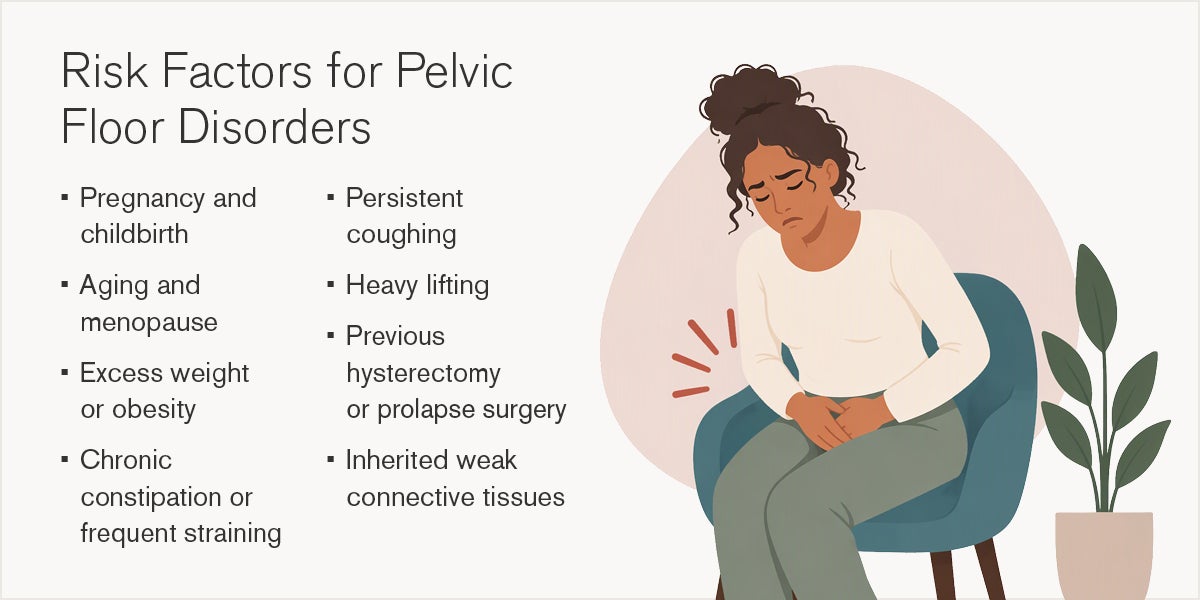
Pelvic organ prolapse can develop for a variety of reasons, with childbirth, aging and other factors all playing a role.
Pelvic organ prolapse after childbirth
Childbirth can stretch and strain the pelvic floor muscles and connective tissues that support the pelvic organs. Risk may increase with multiple vaginal births, though women who have never given birth can also develop pelvic organ prolapse.
Pelvic prolapse and menopause
Pelvic organ prolapse becomes more common with age, particularly after menopause, when declining estrogen levels can contribute to changes in pelvic floor support. Other factors, such as chronic constipation and repeated straining, can also increase pressure on the pelvic floor over time.
“If you have chronic constipation, treating that constipation is a good preventive step. Pelvic floor physical therapy can also help retrain your body to accomplish your goals in a healthier way. Strengthening your pelvic floor, core and lower back can help prevent prolapse from worsening," says Dr. Acevedo-Alvarez.
Diagnosis and treatment options for pelvic organ prolapse
Pelvic organ prolapse is diagnosed through a medical history review and pelvic exam, which helps determine the type and severity of prolapse. Treatment depends on symptoms and may range from lifestyle changes, pelvic floor physical therapy and pessaries to minimally invasive surgical procedures that restore support and improve quality of life.
Does prolapse always require surgery?
Pelvic organ prolapse does not always require surgery. Diagnosis typically begins with a discussion of your symptoms, medical history and a pelvic examination. Depending on your symptoms, your physician may recommend additional testing to evaluate bladder, bowel or pelvic floor function. Treatment depends on factors such as which organs are affected, how bothersome your symptoms are, your overall health and your individual preferences and goals.
“Because it’s a benign condition, treatment really depends on how bothered patients are by their symptoms. If they’re having difficulty urinating or having bowel movements, or they’re unable to perform their regular, every day activities because of the prolapse, we recommend treatment," says Dr. Acevedo-Alvarez.
Nonsurgical options may include:
- Pelvic floor therapy. Pelvic floor muscle training strengthens muscles that support the bladder, rectum and uterus and may help with symptoms such as urine or stool leakage. A healthcare professional can help determine whether these exercises are appropriate for you and help make sure you're using the correct muscles.
- A pessary. A pessary is a removable device placed inside the vagina to help support the pelvic organs. Pessaries are often among the first treatments a doctor may try for pelvic organ prolapse.
- Lifestyle and symptom management. Addressing factors that put repeated pressure on the pelvic floor, including chronic constipation, straining or chronic coughing, may be part of an individualized treatment plan.
For women whose symptoms are significant or who don't get enough relief from nonsurgical approaches, surgery may be considered. Surgical options vary based on the type of prolapse and the patient's individual circumstances and goals.
How to know which treatment is right for you
There's no single pelvic organ prolapse treatment that's best for every woman. That's where urogynecology comes in.
Urogynecologists specialize in pelvic floor disorders and conditions involving the bladder, vagina and other pelvic structures. At Loyola Medicine, our team specializes in urogynecology and reconstructive pelvic surgery, with clinical interests that include pelvic organ prolapse, cystocele, rectocele, urinary incontinence, vaginal prolapse repair and reconstructive gynecologic surgery.
“Our goal is to make sure patients maintain an excellent quality of life, that they’re still physically and socially active and not feeling limited by their prolapse. If your quality of life is being impacted in any way by prolapse, we encourage you to come see us," says Dr. Acevedo-Alvarez.
As an academic medical center, Loyola Medicine combines advanced clinical expertise, innovative treatment approaches and access to the latest research to help women achieve the best possible outcomes.
When is it time to see a urogynecologist?
Consider talking with your physician or a urogynecology specialist if you notice a vaginal bulge, persistent pelvic pressure, urine leakage, difficulty emptying your bladder, bowel problems or other pelvic floor symptoms, particularly when they interfere with activities you enjoy. These are recognized symptoms of pelvic organ prolapse and other pelvic floor disorders.
Pelvic floor problems are common. More importantly, they are treatable. Whether the right approach involves pelvic floor therapy, a pessary, lifestyle changes or surgery, understanding your options is the first step toward getting back to the activities and routines that matter to you.