
Bariatric revision surgery: When and why it’s needed
March 16, 2026
By: Ryan Headley, MD
Categories: Bariatrics, Bariatric Surgery, Bariatric and Metabolic Surgery
For many people, bariatric surgery is a life‑changing step toward better health. But weight loss is a long journey, and sometimes new challenges arise. Some patients find themselves struggling years after their first procedure, whether from weight regain, new symptoms or changes in their anatomy over time. When that happens, revision bariatric surgery may be an option.
Revision surgery is becoming more common as more people undergo bariatric procedures. Almost 15% of all bariatric patients in the United States undergo these operations. And although most patients never require adjustments, the need for revision can grow over time as weight‑related issues return or new complications develop.
What is bariatric revision surgery?
Bariatric revision surgery refers to any follow‑up procedure performed after a previous weight loss surgery. It generally falls into three categories: modifying the original procedure, converting to a different type of bariatric surgery or reversing the procedure.
“I would describe most revision bariatric surgery as an adjustment of the original operation, rather than a fix for something that went wrong the first time,” says Ryan Headley, MD, general surgeon at Loyola Medicine.
While most bariatric surgeries are performed correctly the first time, revisions may be needed years later for several reasons. The patient’s anatomy may change over time, the original procedure may no longer be commonly used or symptoms may develop years later.
Why would someone need a second bariatric surgery?
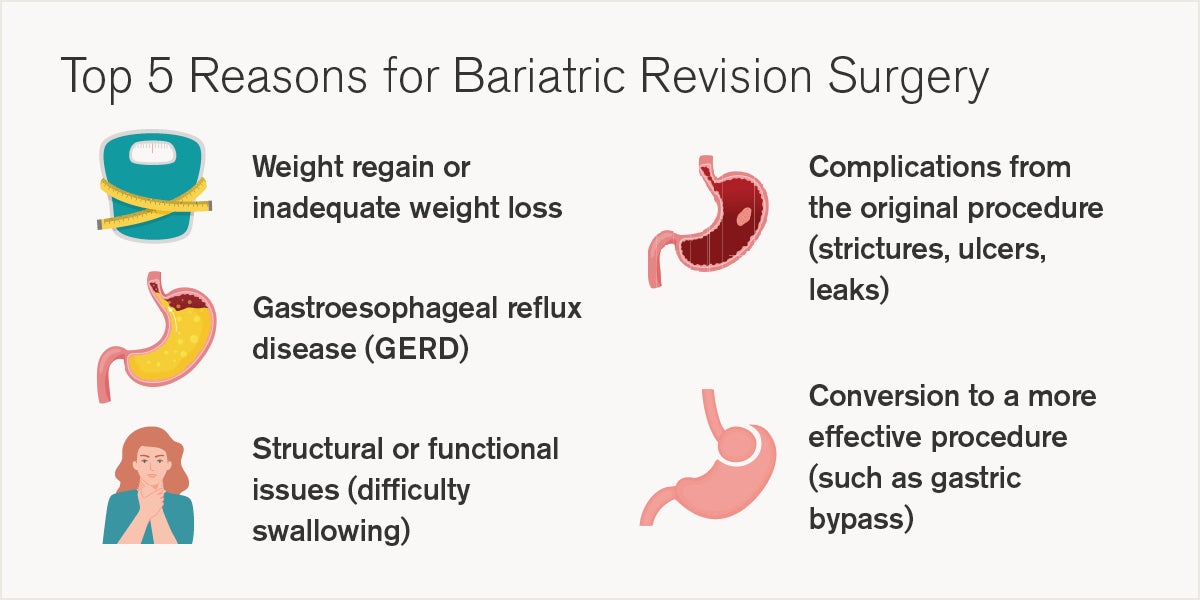
The most common reason for a second bariatric surgery is weight regain, often called weight recidivism. Nationally, it’s one of the leading indications for revision. Patients may also need revision surgery due to circumstances beyond their control.
Symptoms from the original operation
Some people develop heartburn or reflux years after a sleeve gastrectomy. This is one of the more common side effects seen after sleeve surgery, and a frequent reason surgeons convert the sleeve to a gastric bypass. These sleeve patients may experience GERD, ulcers or strictures that require correction.
Anatomical issues that appear years later
Scar tissue can slowly build up, causing narrowing or obstruction. Patients can also develop ulcers, hernias or even fistulas over time.
Older weight loss surgical techniques
Procedures like gastric banding are now far less common. Many patients who had early operations eventually need updates or conversions. Bands can often require removal or conversion due to long‑term complications or ineffectiveness.
“In some cases, patients have undergone multiple prior operations that no longer serve them well. Removing outdated or ineffective devices and converting to a gastric bypass, for example, can restore both safety and effectiveness,” says Dr. Headley.
When is revision surgery recommended?
Despite the need for revision surgery in many cases, it's rarely the first step. Non‑surgical approaches, like nutrition, medications and behavioral changes, are generally tried before another operation. For weight regain, that usually means trying medications and lifestyle changes first while complications like severe reflux are often treated by medication before recommending surgery. But for structural problems like strictures or fistulas, surgery may be the only solution.
What types of revision procedures are available?
The right revision surgery depends on the patient’s original procedure and the problem they’re now facing. Common revision options include:
- Sleeve‑to‑gastric bypass conversion: This is one of the most frequent revisions today, especially for patients with reflux or weight recurrence.
- Band removal and conversion: Patients with older adjustable gastric bands may need removal and conversion to a sleeve or bypass.
- Revision of gastric bypass: Sometimes bypass patients need adjustments due to ulcers, strictures or weight regain.
“It is important to avoid repeating an approach that has already proven ineffective; a different surgical strategy is often warranted,” says Dr. Headley.
While revisional bariatric procedures can offer significant benefits, including helping patients lose additional weight and reduce comorbidities, procedure outcomes and success rates can vary more than the initial surgery.
Despite the challenges, many patients still see meaningful improvement, especially when the revision targets a specific complication like reflux or anatomical blockage.
How do you know if you’re a candidate for revisional bariatric surgery?
You may be a candidate for revision bariatric surgery if:
- You’ve regained weight after your previous surgery
- You’re experiencing severe heartburn, reflux, or difficulty swallowing
- You have ulcers, strictures, or anatomical complications
- Your original surgery used an older technique
- Your quality of life has worsened due to symptoms after surgery
Your care team will review your medical history, evaluate your anatomy and determine whether non‑surgical options could help first. Determining candidacy also includes assessing weight loss progress, symptoms and complications.
Why Loyola Medicine is a leader in bariatric revision surgery
Loyola Medicine continues to be a regional leader in advanced bariatric and revision surgery, continuing to focus on complex bariatric cases, especially revisions, which require a higher level of surgical skill and thoughtful decision‑making.
Revision bariatric surgery also works best when patients have access to a coordinated support system, and that’s where Loyola’s multidisciplinary approach makes a meaningful difference. Patients are cared for by a team that includes surgeons, nutritionists, psychologists, medical obesity specialists, and exercise professionals who stay involved long after the operation is complete. This kind of ongoing collaboration emphasizes the importance of long‑term monitoring, nutritional oversight, and behavioral support for bariatric patients.