
Bariatric endoscopy explained: Non-surgical options for losing weight
May 20, 2026
By: Roberto Simons-Linares, MD
Categories: Bariatrics
Tags: Endoscopic weight loss, weight loss, obesity, Bariatric endoscopy
Obesity is a complex, chronic condition, and there is no single solution that works for everyone. For some patients, traditional bariatric surgery may feel too invasive, while medication alone may not provide enough support. Non-surgical (endoscopic) weight loss procedures offer a minimally-invasive weight loss option without incisions for patients looking for an alternative to bariatric surgery, including gastric bypass. At Loyola Medicine, these procedures are part of a personalized, comprehensive weight management program designed to help patients safely lose weight and improve their long-term health.
“Obesity is a chronic, relapsing and complex disease, very similar to diabetes. There is no one-size-fits-all treatment, and patients often need different tools at different stages of their journey,” says Roberto Simons-Linares, MD, director of interventional GI/endoscopy at Loyola Medicine.
What are endoscopic weight loss procedures?
Non-invasive weight loss procedures use a device called an endoscope. This device is a tube roughly the size of a small finger with a tiny camera at the end. It’s inserted into the mouth and allows the doctor to see inside the gastrointestinal tract and complete the necessary procedure.
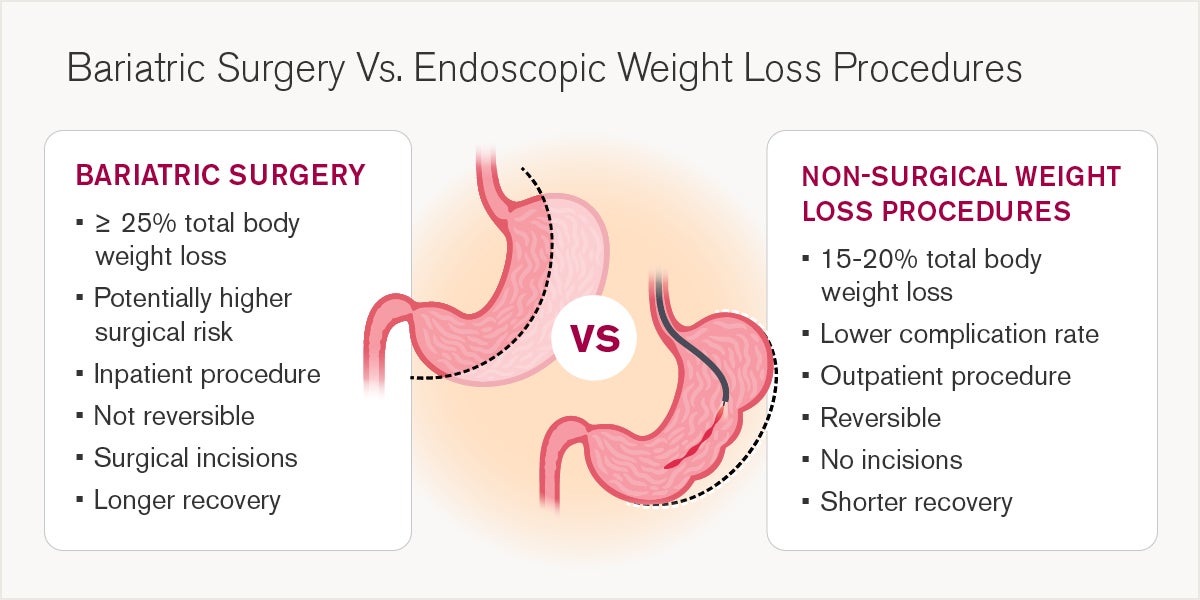
With bariatric endoscopy, there are no external cuts, scars or drains. The procedures are non-surgical and incisionless, performed while the patient is sedated. Most people head home the same day, and recovery is like that of a colonoscopy where they can return to normal activities within a couple of days.
“Endoscopic weight loss procedures help patients lose significant weight and improve chronic metabolic diseases such as diabetes, high blood pressure, abnormal cholesterol and fatty liver disease,” says Dr. Simons-Linares.
How non-surgical procedures differ from bariatric surgery
Not every patient is suited for a non-surgical procedure. For greater weight loss, bariatric surgery is still the best option. However, certain bariatric procedures can be more intensive and have higher risks unlike an endoscopy which is, generally, easier, with less risk to the patient.
“The more invasive the treatment, the more total weight loss you can expect. That’s the trade-off. Non-surgical procedures work, but they are not meant to replace bariatric surgery in patients with advanced disease,” says Dr. Simons-Linares.
How patients are evaluated
Long before a patient enters the operating room, many factors are considered and discussed with their doctor to establish which procedure or medication will be best for them. These factors include:
- Disease severity. If a patient has coexisting conditions (other serious medical conditions) or suffers from an extreme obesity, one surgery may be preferred over another.
- Long-term versus short-term goals. What you want to accomplish within a couple months is different than years in the future. This can influence your treatment approach.
- Medical urgency. Many patients need to quickly lose weight for an upcoming transplant or orthopedic surgery.
- Patient knowledge and readiness. It’s important to fully understand every option available to you before making a decision about your health.
- Personal fears and lived experiences. You may have already tried one approach and now want to try something different.
Generally, a doctor will recommend bariatric surgery first in the case of advanced disease. If the patient declines or it’s not needed, then an endoscopic procedure combined with medication is considered. Weight loss medication or a bariatric endoscopy by themselves are also options.
Non-surgical endoscopy procedures offered at Loyola Medicine
Endoscopic sleeve gastroplasty (ESG)
While there are different types of endoscopic weight loss procedures, the most common one is an endoscopic sleeve gastroplasty. This procedure, sometimes referred to as stomach stitching or an endoscopic stomach sleeve, reshapes the stomach without surgery. During this operation, the stomach is sutured internally to reduce the size. The doctor creates a banana shaped stomach, made to mimic the effects of a surgical sleeve gastrectomy without removing part of the stomach.
Endoscopic revision of prior bariatric surgery
Some patients regain weight after bariatric surgeries, such as gastric bypass or surgical sleeve gastrectomy. Some procedures may also need to be resized if weight loss wasn’t sufficient. In these cases, a revision after bariatric surgery can be done with an endoscopy.
Intragastric balloon
In a gastric balloon treatment, a small balloon is inserted into the stomach to create a feeling of fullness more quickly and to help limit how much food is eaten. However, this is not used as commonly nor is it a permanent solution. The balloon is removed after six months or when weight loss goals are met for the patient.
“These procedures are not experimental. We have over 10 years of data showing sustained weight loss, full FDA approval, and insurance coverage, including Medicare,” says Dr. Simons-Linares.
Follow-up care and long-term management after bariatric endoscopy
At Loyola Medicine, teams manage obesity as a long-term disease rather than treating with a one-time procedure. Providers recognize obesity as a chronic, relapsing condition and commit to ongoing follow-up to support lasting results and overall health.
A multidisciplinary weight loss team delivers follow-up care and may include medical specialists, registered dietitians and behavioral health professionals. The team regularly monitors progress to identify changes early and adjust care as needed to avoid weight regain. Nutrition, mental health and management of related conditions over time are provided to patients.
Lifelong partnership
After the procedure is complete and patients start losing weight, lifelong follow-up appointments will be required to maintain health. During the first year, the doctors will check in multiple times then once a year indefinitely if no complications arise. Obesity care is a long-term partnership between patients and clinicians, focused on sustained maintenance of your health and response to potential weight regain.
“I tell patients from the beginning: this is lifelong follow-up. Even when things are going well, I want to see you at least once a year,” says Dr. Simons-Linares.