
Skin cancer patient aims to raise awareness following complex facial reconstruction
June 9, 2026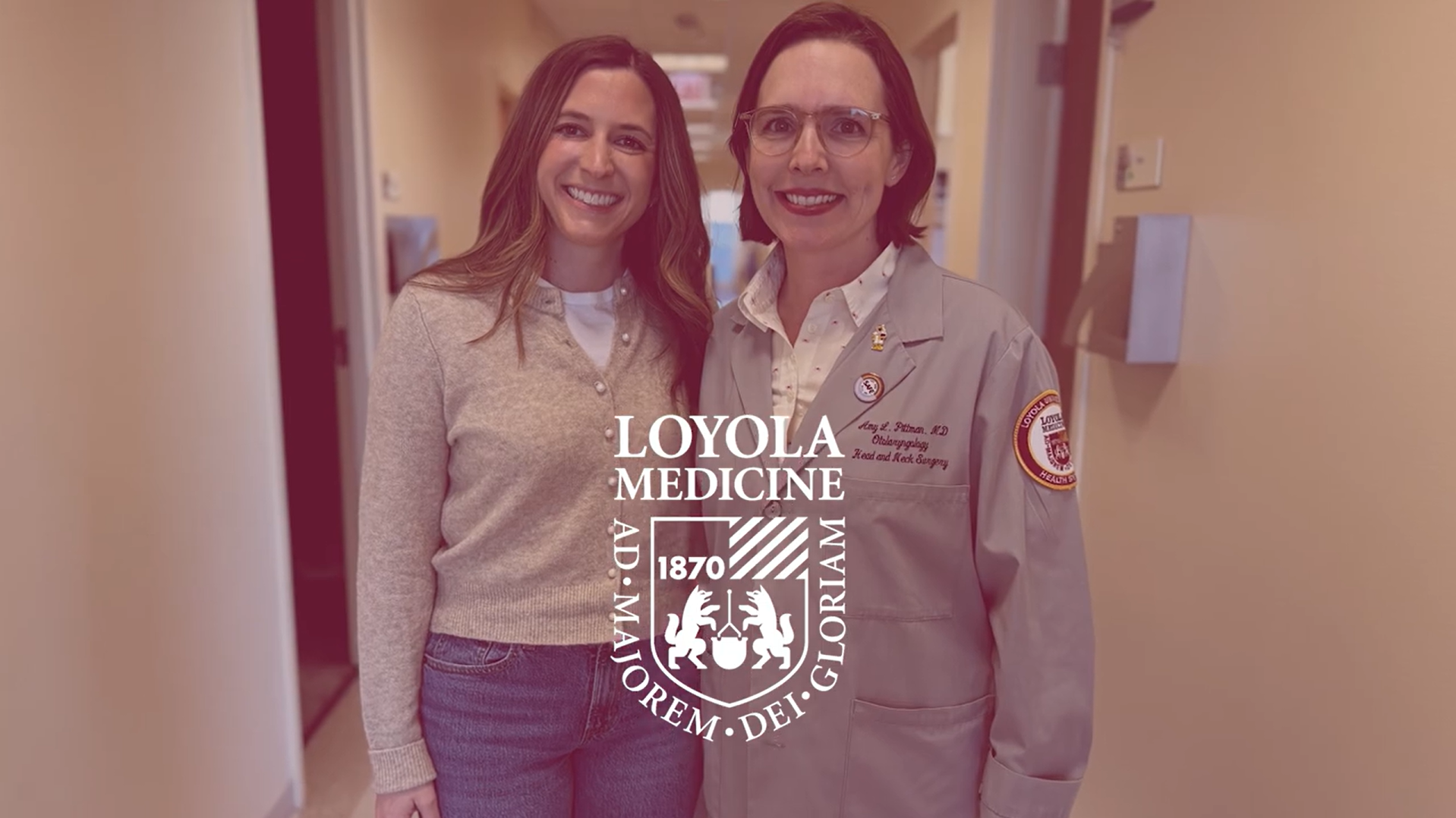
CONTACT:
Allison Peters
allison.peters@luhs.org
708-216-5500
As summer begins and more people spend time outdoors, Loyola Medicine is sharing the story of schoolteacher Courtney Voss to highlight the importance of skin cancer prevention, early detection and treatment, from a routine screening to complex facial reconstruction and her journey to becoming an advocate for awareness.
Voss went in for a routine screening with her dermatologist for a small freckle on her cheek. Doctors decided to biopsy the mark, which was found to be melanoma in situ. This stage 0 cancer is the earliest form of skin cancer, where abnormal cells are confined to the top layer of skin and have not invaded deeper layers or spread. Years of sun exposure and tanning as a teenager and young adult likely contributed to the diagnosis.
Mohs procedure: advanced surgical treatment for facial skin cancer
Dermatologists suggested that Voss undergo a Mohs procedure, which is a precise layer-by-layer skin removal technique. Each layer is closely examined, and the process continues until no cancer is detected.
Because the cancer was located on the face, Amy Pittman, MD, a Loyola Medicine facial reconstructive surgeon, recommended a staged approach, which would involve plastic and reconstructive surgery after the cancer was removed.
Surgeons were unable to achieve clear margins during the initial surgery, requiring multiple additional surgeries over several weeks to fully remove the cancer. Each surgery increased the size of the facial defect, transforming what initially appeared to be a small area into a significant reconstruction challenge. Once doctors confirmed the cancer was completely removed, Dr. Pittman shifted focus to restoring the Voss’s appearance and function.
“Dr. Pittman is the most understanding, kind and calm doctor I’ve ever met,” said Voss. “I was very emotional a lot of the times that I spoke with her. I could always count on her to be there and answer any of my questions that I had which made me feel very comfortable.”
Facial reconstructive surgery after melanoma treatment
Surgeons used advanced reconstructive techniques, including tissue expansion, to rebuild Voss’s cheek using her own skin. The process allows doctors to use the patient’s own skin, which provides the best match in color and texture while preserving facial movement and expression. Tissue expanders placed beneath the skin of the cheek and neck were gradually filled over several months, allowing healthy skin to stretch and create enough tissue for a natural reconstruction.
The expansion process lasted three to four months before doctors were ready to begin the reconstructive surgery. Voss estimates she had 100 stitches across her face and neck. She credits the support of family, friends and colleagues, as well as the compassion of her care team, for helping her through the most difficult moments.
“There was so much worry on her end and not being able to see the light despite the trees,” said Dr. Pittman. “So, for us to be able to say, ‘I’ve done this before and I’m comfortable with this,’ I think is really important.”
Loyola patient raises awareness about skin cancer prevention
Now cancer-free, Voss is focused on healing and using her experience to raise awareness during Skin Cancer Awareness Month. She ran the 2025 Chicago marathon for the American Cancer Society, fundraised for them, and was invited to speak at their team dinner prior to the run.
Voss says if she could change anything, she would have worn more sunscreen, which she does daily now. “I want to make sure I help others avoid anything like this.”
Loyola Medicine offers comprehensive skin cancer care through a multidisciplinary team of dermatologists, surgeons and plastic and reconstructive specialists. This integrated approach allows patients to receive seamless care, from diagnosis and cancer removal to advanced reconstruction and recovery.
As the weather gets warmer and people are enjoying outdoor activities in the sunshine, Loyola Medicine encourages the public to schedule regular skin exams, use sunscreen daily and seek medical care for any changing or unusual skin lesions.
From skin cancer diagnosis to healing
Watch Voss’s story here: