Loyola Medicine cardiac rehab graduate raises awareness of rare cardiac event
March 16, 2026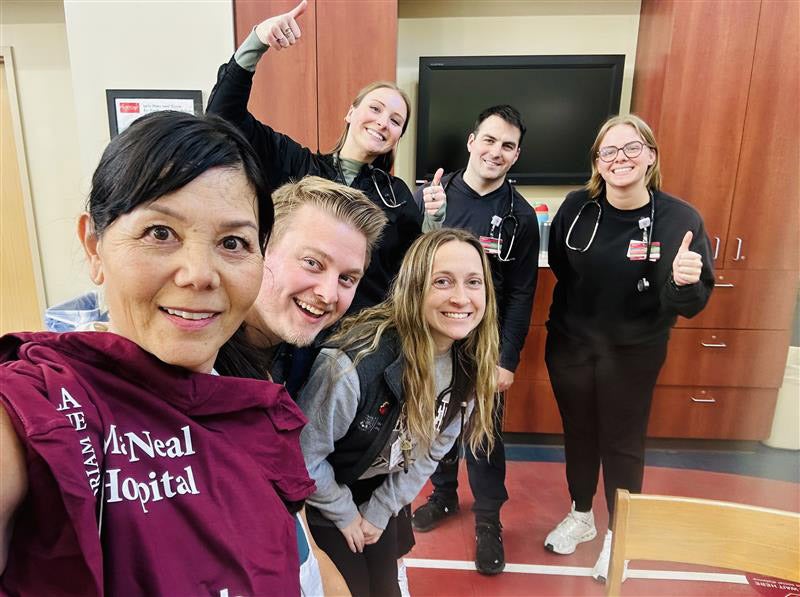
Categories: Heart & Vascular
Tags: Cardiac Rehab, spontaneous coronary artery dissection, SCAD
At 58, Lourdes Nicholls was committed to living a very healthy life. A vegetarian, non-smoker with no known cardiac risk factors, she was rarely ever sick. Until one day in May, a sudden cardiac emergency, potentially caused by an abrupt hormone shift, changed everything.
After returning home on May 16, Nicholls suddenly sensed something was wrong. “I had to lay on the couch,” Nicholls recalled. “Suddenly, it just felt like my shirt got so tight, like I was going to bust out of it.”
Nicholls went to her local emergency room, where she learned that she had suffered a spontaneous coronary artery dissection (SCAD), a cardiac incident caused by a tear in the wall of a heart artery. While historically rare, SCAD diagnoses are increasing as testing and awareness improve. The condition is most common in women under 50 who have no traditional cardiovascular risk factors.
"Nearly five percent of all patients with acute coronary symptoms have SCAD,” said Subir Shah, DO, a cardiologist with Loyola Medicine. “In women under age 50, it could account for up to 35% of patients.”
Loyola’s cardiac program treats SCAD and other heart disease impacting women
SCAD is a relatively new diagnosis, and research is ongoing to learn more about its causes and affected population, often women. Early intervention is key to preventing long-term damage, and physicians encourage anyone with concerning symptoms to seek immediate medical attention.
“New onset chest pain that is unexplainable and doesn’t go away is the most common symptom we see,” said Dr. Shah. “Sometimes this can happen when dealing with a physically or emotionally stressful event. Many times, it is seen in pregnant patients who have chest pain. It most commonly occurs in the first or second week after delivery.”
For Nicholls, this incident came after an IUD removal procedure, an abrupt hormonal shift doctors believe may have triggered the dissection. Left untreated, SCAD can lead to a major heart attack or lifelong complications. “It was all very shocking, but thank goodness I'm alive,” said Nicholls.
Nicholls spent a week recovering at her local hospital before being referred to cardiac rehabilitation, a medically supervised exercise and education program shown to strengthen the heart and reduce the risk of future cardiac events. Nicholls wanted an in-person program and found MacNeal Hospital's Cardiac Rehab Program, one of the largest cardiac rehab programs in the Chicagoland area. The program provides more than 10,000 patient visits annually, with women representing nearly half of its participants.
Cardiac rehabilitation at MacNeal Hospital serves patients from all local area hospitals
In 2025, MacNeal enrolled 264 patients for cardiac rehab, including about six SCAD patients. Program participants come from all area hospitals, including Loyola Medicine. Those who attend a cardiac rehab program historically have lower readmission rates or second cardiac events. Although only about 25% of eligible patients nationally attend cardiac rehab, more than 80% of Loyola-referred patients enroll. While just 17% of patients nationwide complete all 36 sessions, more than 80% of Loyola patients reach graduation.
Betsy Hart, supervisor of MacNeal Hospital’s Cardiopulmonary Rehab Program, has worked with the program for 20 years. She has witnessed an evolution as the number of younger patients increases. In response, the program has evolved to provide a more challenging experience when appropriate, including gym-style equipment, strength and balance training, and individualized exercise plans.
Many of these patients, especially those with SCAD, are in good physical shape with no history of cardiac issues, which can lead to frustration and fears about health and exercise. During workouts, clinicians monitor patients’ heart rates, blood pressure and other potential risk factors. Participants are also educated on warning signs and tips for self-monitoring after rehab.
“I think really what SCAD patients in particular get out of cardiac rehab is a rebuilt confidence,” said Hart. “We can show them that nothing bad is going to happen to their hearts when they exercise. Our gym is like a test lab for them, where they can push themselves under supervision, without fear, so they have the confidence to do the same when they leave.”
Loyola cardiac patient aims to start support group for SCAD survivors
“As women, we tend to be the caretakers for others, especially women in their 40s and 50s, who may still be caring for children or older parents,” said Hart. “They don’t always have that motivation or time to care for themselves. Cardiac rehab can also help give these women a space to put themselves and their health first.”
“I just feel very lucky that I got to go to Loyola,” said Nicholls. “I had such a great experience, I never wanted to leave. A lot of people might not want to go to that type of thing, but it really motivated me. I’ve since joined a gym, which I haven’t done in a really long time.”
Nicholls is hoping to start a support group for SCAD survivors. During her time in rehab, she was able to meet and befriend other members of the program, including another SCAD patient.
“My hope is that after at least one day of rehab, patients understand the why,” said Hart. “Many of them may think they don’t need to be here, maybe because they’re young, or a frailer person may think they can’t do something or feel like they can’t participate. We meet them where they’re at. Our only requirement is that they can get here, and if they can do that, we will take care of them.”