
Anterior hip replacement helps patient return to travel, daily activities without pain
August 26, 2026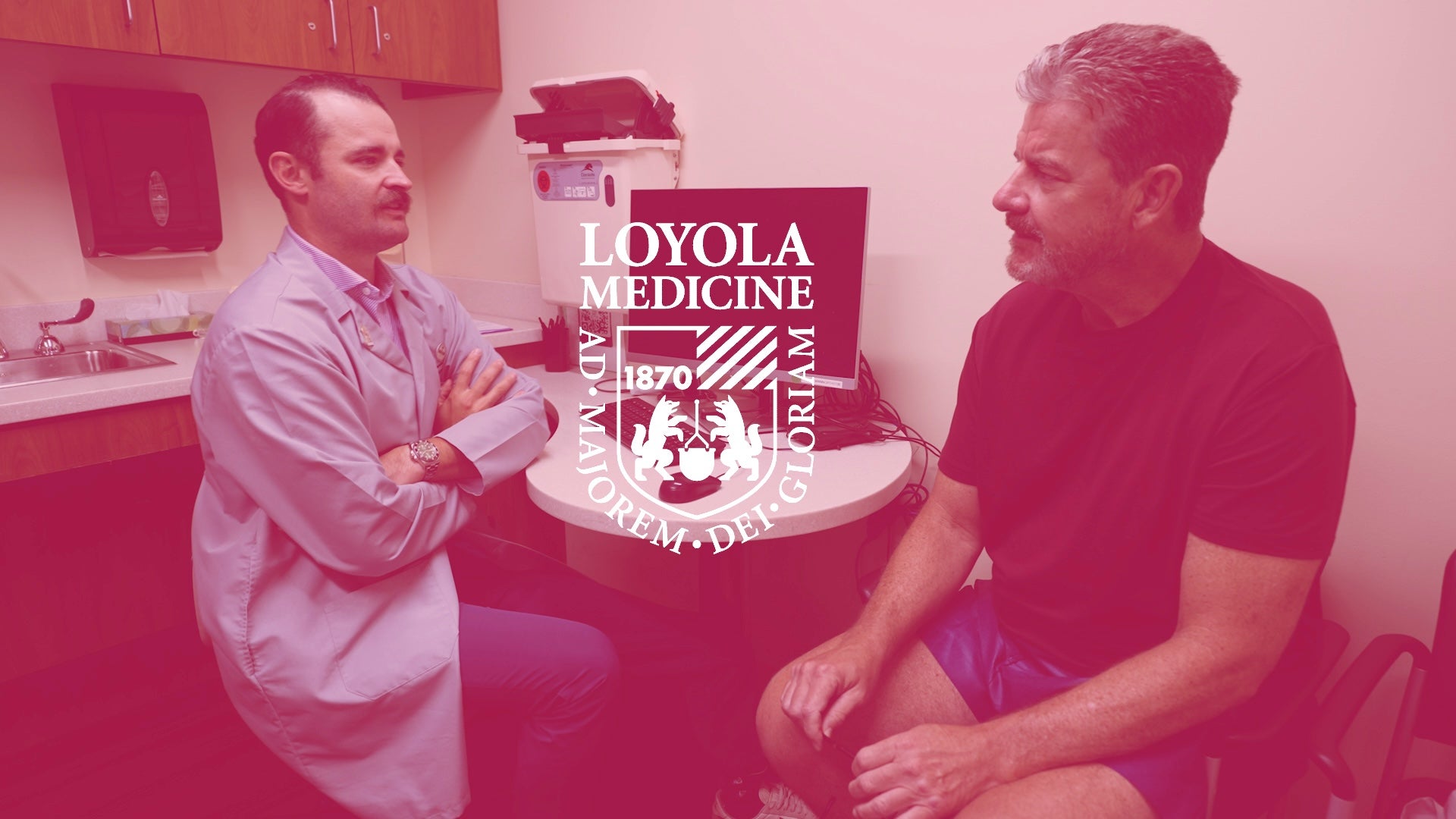
Categories: Orthopaedics
Tags: Anterior Hip Replacement, minimally invasive hip replacement, hip pain
After more than a year of worsening hip pain, a MacNeal Hospital patient finds relief through anterior hip replacement surgery.
For more than a year, hip and groin pain gradually took over Ralph Peck's life. What started as occasional discomfort during physical activities like bike riding eventually became a persistent problem that affected his mobility and quality of life. After trying conservative treatments, including cortisone injections, his symptoms continued to worsen.
MacNeal Hospital patient overcomes chronic hip pain with advanced joint replacement surgery.
As the pain progressed, Ralph sought care at MacNeal Hospital, where he met with orthopedic surgeon, Cameron Killen, MD. After discussing available treatment options, they determined that hip replacement surgery offered the best path forward.
Ralph appreciated the time Dr. Killen spent explaining the procedure. As a union glazer who enjoys understanding how things work, he wanted to know the details of the operation, from the materials used to what would happen during surgery.
"I just felt confident in Dr. Killen, and I felt like I wasn't just another patient, another number," said Ralph.
Dr. Killen performed Ralph's surgery using a direct anterior approach, a minimally invasive technique that accesses the hip joint from the front of the body. Unlike some traditional hip replacement approaches, the procedure does not require surgeons to cut through major muscles to reach the joint.
Direct anterior hip replacement helped patient get back on his feet faster
"The way I do hip replacements is through what's called a direct anterior approach," Dr. Killen explains. "We don't severe any muscle. It allows for a quicker recovery, a lower risk of a dislocation after surgery and a quicker return to normal day-to-day life."
The surgery was also supported by a rapid recovery protocol designed to help patients regain mobility immediately after their procedure. Patients are encouraged to begin walking shortly after surgery and start outpatient physical therapy within days.
"Our goal is to have someone walking within 90 minutes of surgery," said Dr. Killen. "They're performing outpatient physical therapy within a day or two."
Committed to achieving the best possible outcome, Ralph fully embraced the recovery process.
"I was very thorough with my therapy," said Ralph. "I did my therapy, and then it went from a walker to a crutch, you know, and I would go outside and walk down the block, whatever I could and try to get better and better."
Three months after hip replacement surgery, patient walks 10,000 steps a day, pain-free
Just months after surgery, Ralph experienced the kind of recovery he had hoped for. During a 10-day family trip to Ireland, he was able to keep up with sightseeing, navigate buses and walk long distances without the limitations that had once defined his daily life.
"I was able to walk and basically I was getting about 10,000 steps a day,” said Ralph. "I felt great.” For Dr. Killen, stories like Ralph's illustrate the impact that joint replacement surgery can have on patients' lives.
"For someone like him to come in and say, you know I'm pain free here, three months out from surgery, just got back from a European vacation and felt great the whole time that that's why I do what I do," said Dr. Killen.
Today, Ralph credits both his surgeon and his dedication to rehabilitation for his successful outcome.
"I gotta say, between Dr. Killen and his skills and my dedication to therapy, I think we knocked it out of the ballpark."