
What to expect during your visit to the ER
February 27, 2026
Categories: Emergency Care, Emergency Medicine & Trauma
Tags: Emergency Medicine
Every year, over 150 million people visit an emergency department. Unfortunately, it can often be a confusing and nerve-wracking experience. However, Loyola Medicine wants to help you approach this trying time with confidence. Knowing what to expect ahead of time can ease stress during your emergency room visit. It can also help ensure you feel supported by physicians and staff.
When to go to the ER
It’s important to determine whether the emergency room is the appropriate place to go. When you are feeling ill or have been injured, it’s not always easy to know if a visit to the emergency room is warranted. However, the general rule of thumb is that if an illness or injury is potentially life-threatening, then the emergency room is your best option. Trust your instincts; if the issue seems serious, then it probably is.
However, if your condition is something you would normally address with your regular doctor, like the flu, strep throat, sinus infection, or sprains, but you are unable to reach them, an immediate care center may be the right choice for you.
Step-by-step guide to the emergency room
No two visits to the emergency room are exactly the same. Your medical history and the severity of the illness or injury will influence your experience and determine which tests or evaluations you may need. The following steps will help you prepare for your ER visit and know what to expect.
1. Create an emergency checklist
No one knows when an emergency is going to happen. That’s why being prepared can make all the difference. A checklist of items to bring to the emergency room will be beneficial if/when something occurs. In general, bring anything that can be helpful for the doctors and staff. This includes:
- ID and insurance card
- List of medications
- List of allergies
- Emergency contacts
- Previous relevant medical records (if available)
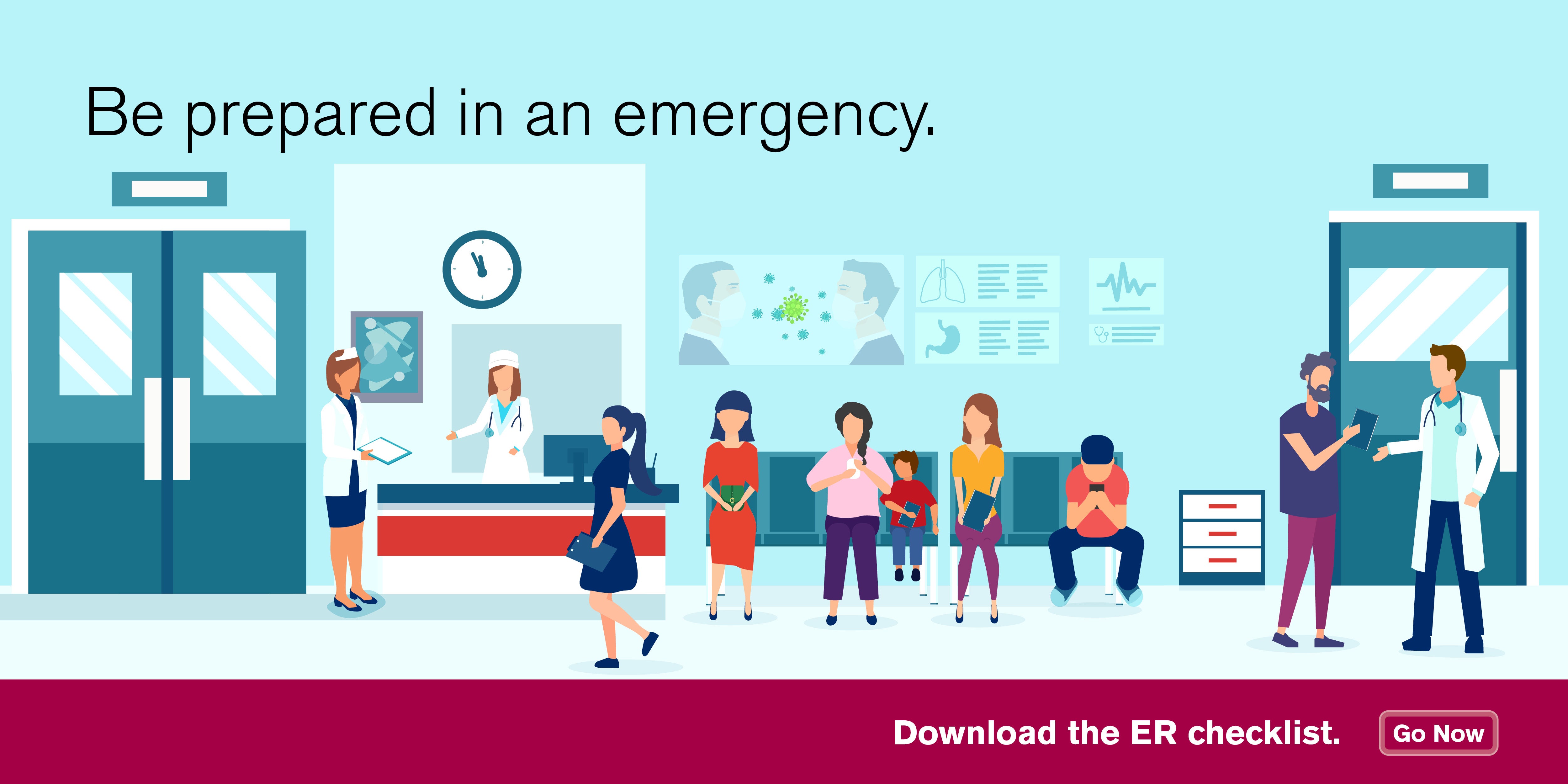
By bringing these items, you can speed up the intake process upon arrival and make treatment easier. Also, if it’s safe to do so, bring things that enhance comfort, such as:
- Phone charger
- Something to eat (ask attending nurse beforehand if food is okay to consume)
- Wear loose, comfortable clothing
2. Arrival and registration
Upon arrival, you will be greeted by a registration staff member or nurse who will collect your information and begin the check-in process.
3. Triage
Next, a triage nurse and/or medical provider will assess the urgency of your condition. Staff will ask about your symptoms, obtain your vital signs and review your medical history. Depending on the severity of your condition and bed availability in the emergency department, you will be directed to the ER waiting room, sent for testing, or placed in a treatment area.
4. Medical screening and initial evaluation
To fully understand your condition and deliver the best treatment, an emergency medicine provider may order diagnostic tests, such as labs, X-rays, CT scans or ultrasounds.
5. Diagnostic testing
After testing, results will be processed and used to determine the next steps. Depending on the severity of your condition, you may wait in the waiting room while physicians work to deliver results as quickly as possible. The exact length of time depends on the test:
- CT scan: 3 to 4 hours
- Ultrasound: 3 to 4 hours
- X-rays: 2 to 3 hours
- Lab tests: 1 to 2 hours
6. Treatment Plan
Once your results are available, your provider will discuss your diagnosis and treatment plan. Patients will either be discharged home with instructions and/or prescriptions or admitted to the hospital for further monitoring and care.
7. Final steps checklist
Every patient should be able to answer “YES” to the following questions before leaving the emergency department:
- Do you understand your diagnosis and treatment plan?
- Do you have your prescriptions (if needed)?
- Do you have a work/school excuse note from the provider (if needed)?
- Do you know where, when and how to follow up if additional care is needed?
If you can’t answer these questions with a definitive “YES,” please ask your care team for help before leaving.
Visit the pharmacy before leaving the hospital
If prescriptions are needed, there’s no need to make an additional stop. Patients can fill their prescriptions, before they leave, at one of Loyola Medicine’s convenient outpatient pharmacies.
Loyola Outpatient Center (Maywood)
Monday through Friday, 8 am – 4 pm
Loyola University Medical Center (Maywood)
Monday through Friday, 8 am – 6 pm
Gottlieb Professional Office Building (Melrose Park)
Monday through Friday, 9 am – 5 pm
MacNeal Hospital (Berwyn)
Monday through Friday, 9 am – 6:30 pm
Make your voice heard
At Loyola Medicine, we are committed to excellence in patient care. Our mission goes beyond treating your illness; we also care for the human spirit. Your well-being is a shared responsibility between you and your health care team. If you have questions or concerns about your emergency care experience, please ask a staff member to escalate your concern to emergency department leadership. We want to ensure your feedback is addressed promptly and respectfully.
Our Patient Relations Coordinators are available to assist with concerns or grievances. They are dedicated to ensuring your voice is heard and your needs are handled with compassion and care. Call 708-216-5140 for assistance.