CONTACT:

Carol Eggers 
carol.eggers@luhs.org
708-216-2445

MAYWOOD, IL – As spring arrives in the Chicago area, Loyola Medicine’s trusted daily allergy count is returning to help residents manage seasonal allergies. The official Loyola Medicine Allergy Count, compiled at Gottlieb Memorial Hospital, resumes Tuesday, April 1, providing weekday updates throughout allergy season.

For more than 20 years, Loyola Medicine has delivered one of the region’s most reliable pollen counts, offering timely data on tree, grass, weed pollen and mold levels. Allergy sufferers can access the latest counts by following @LoyolaAllergy on X or Threads.

“Seasonal allergies can cause much more than sneezing and congestion,” said Rachna Shah, MD, lead of the Loyola Medicine Allergy Count. “High pollen levels may also trigger coughing, wheezing and shortness of breath, especially for people with asthma. With the recent unpredictable weather, pollen counts are going to be even more important to help allergy sufferers take preventive steps and reduce symptoms.”

How the Loyola Medicine Allergy Count works

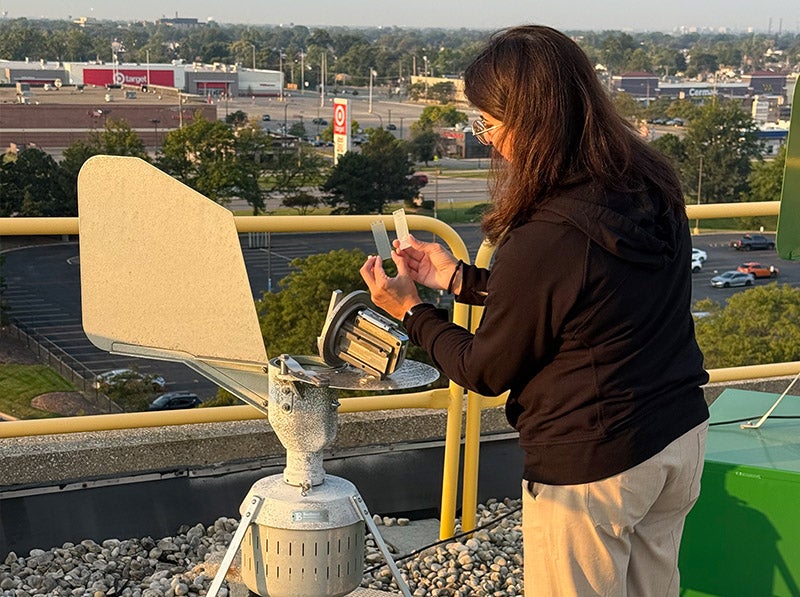
The allergy count is conducted every weekday morning using air samples collected from the roof of Gottlieb Memorial Hospital. A cubic meter of air is analyzed under a microscope to identify and count pollen grains and mold spores. Daily reports include specific counts for tree, grass, weed pollens and mold, helping patients and clinicians make informed decisions.

Dr. Shah explains the process in detail in this video, which also highlights the importance of accurate and consistent pollen monitoring.

What to expect during allergy season

In the Chicago area, allergy season typically runs from March through the end of September: 

  • Tree pollen: late March through April
  • Grass pollen: May and June
  • Weed pollen: July and August
  • Ragweed: late August through the first frost
  • Mold: present throughout the season, especially during damp conditions

For daily updates and allergy management tips, visit loyolamedicine.org/allergy-count.

About Loyola Medicine

Loyola Medicine, a member of Trinity Health, is a nationally ranked academic, quaternary care system based in Chicago's western suburbs. The three-hospital system includes Loyola University Medical Center (LUMC), Gottlieb Memorial HospitalMacNeal Hospital, as well as convenient locations offering primary care, specialty care and immediate care services from nearly 2,000 physicians throughout Cook, Will and DuPage counties. LUMC is a 547-licensed-bed hospital in Maywood that includes the William G. and Mary A. Ryan Center for Heart & Vascular Medicine, the Cardinal Bernardin Cancer Center, the John L. Keeley, MD, Emergency Department, a Level 1 trauma center, Illinois's largest burn center, the Nancy W. Knowles Orthopaedic Institute, a certified comprehensive stroke centertransplant center and a children’s hospital. Having delivered compassionate care for over 50 years, Loyola also trains the next generation of caregivers through its academic affiliation with Loyola University Chicago’s Stritch School of Medicine and Marcella Niehoff School of Nursing.   

Established in 1961, Gottlieb Memorial Hospital is a 235-licensed-bed community hospital in Melrose Park that includes the Judd A. Weinberg Emergency Department, the Loyola Center for Metabolic Surgery and Bariatric Care, Loyola Cancer Care & Research at the Marjorie G. Weinberg Cancer Center, acute rehabilitation, a transitional care center, childcare center and fitness center. Founded in 1919, MacNeal Hospital is a 349-licensed-bed teaching hospital in Berwyn with advanced medical, surgical and psychiatric services and a 68-bed behavioral health program.

For more information, visit loyolamedicine.org. You can also follow Loyola Medicine on LinkedIn, Facebook, Instagram or X (formerly known as Twitter).

About Trinity Health

Trinity Health is one of the largest not-for-profit, faith-based health care systems in the nation. It is a family of 133,000 colleagues and more than 38,900 physicians and clinicians caring for diverse communities across 25 states. Nationally recognized for care and experience, the Trinity Health system includes 92 hospitals, 101 continuing care locations, the second largest PACE program in the country as well as many other health and well-being services. In fiscal year 2025, the Livonia, Michigan-based health system invested $2.9 billion in its communities in the form of charity care, community benefit and other programs and services. For more information, visit us at www.trinity-health.org, or follow us on LinkedIn, Facebook, and X (formerly known as Twitter).