Loyola Medicine Offers Free Health Screening to Detect Aneurysms
October 19, 2021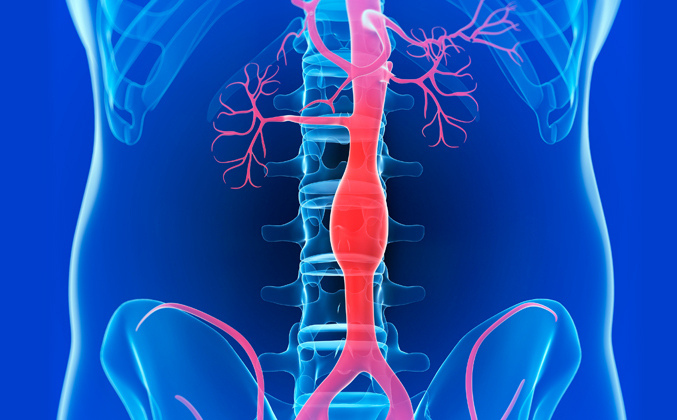
Categories: Loyola Medicine, Heart & Vascular
MAYWOOD, IL – Loyola Medicine's Center for Aortic Disease is set to host a free abdominal aortic aneurysm (AAA) ultrasound screening event on Saturday, November 6. The event will take place at Loyola University Medical Center in the Center for Heart and Vascular Medicine (2160 S. First Ave., Maywood, IL) from 8 am to noon.
Appointments are available to those over 50. Those over 55 with a family history of aneurysms and those over 65 who have ever smoked are especially encouraged to participate. Registration is required and appointments are limited. Those interested in participating should call 833-554-2204.
AAA is a silent killer, affecting approximately 200,000 people in the U.S. each year. According to the Society for Vascular Surgery, a ruptured AAA is the 15th leading cause of death in the United States, and the 10th leading cause of death in men older than 55.
An AAA is a bulge in the wall of the aorta, the largest artery in the body. The aorta originates at the heart and extends down to the abdomen.
"This screening event allows us to screen for and detect aortic aneurysms before they rupture and cause death from bleeding. The noninvasive ultrasound test is the best way to screen for an abdominal aortic aneurysm and measure its size," said Carlos F. Bechara, MD DFSVS, co-director of Loyola Medicine's Center for Aortic Disease.
The biggest risk factors for AAA include a history of smoking, high blood pressure/cholesterol, a family history of AAA, hardening of the arteries and gender, with males at highest risk. Some types of inflammation can cause weakening of the aortic artery wall, leading to AAA. Artery wall tears, infection and congenital connective tissue disorders are also linked.
Identifying aneurysms when they are small allows physicians to monitor them over time and repair once it becomes large enough to pose significant risk of rupture. Depending on the patient's anatomy, the aneurysm can be repaired with a minimally invasive technique or open surgery.
Aneurysms expand slowly over years and typically cause no symptoms until a rupture occurs. The size of the normal abdominal aorta is less than 2 centimeters. Once an AAA reaches approximately 5 centimeters in diameter or more, repair is recommended. More than 10,000 people in the United States die each year from undiagnosed AAAs.
Loyola Medicine's Center for Aortic Disease provides comprehensive care to patients and genetic testing for patients at risk for complex aortic disease. To learn more about Loyola Medicine and the Center for Aortic Disease, visit loyolamedicine.org.